


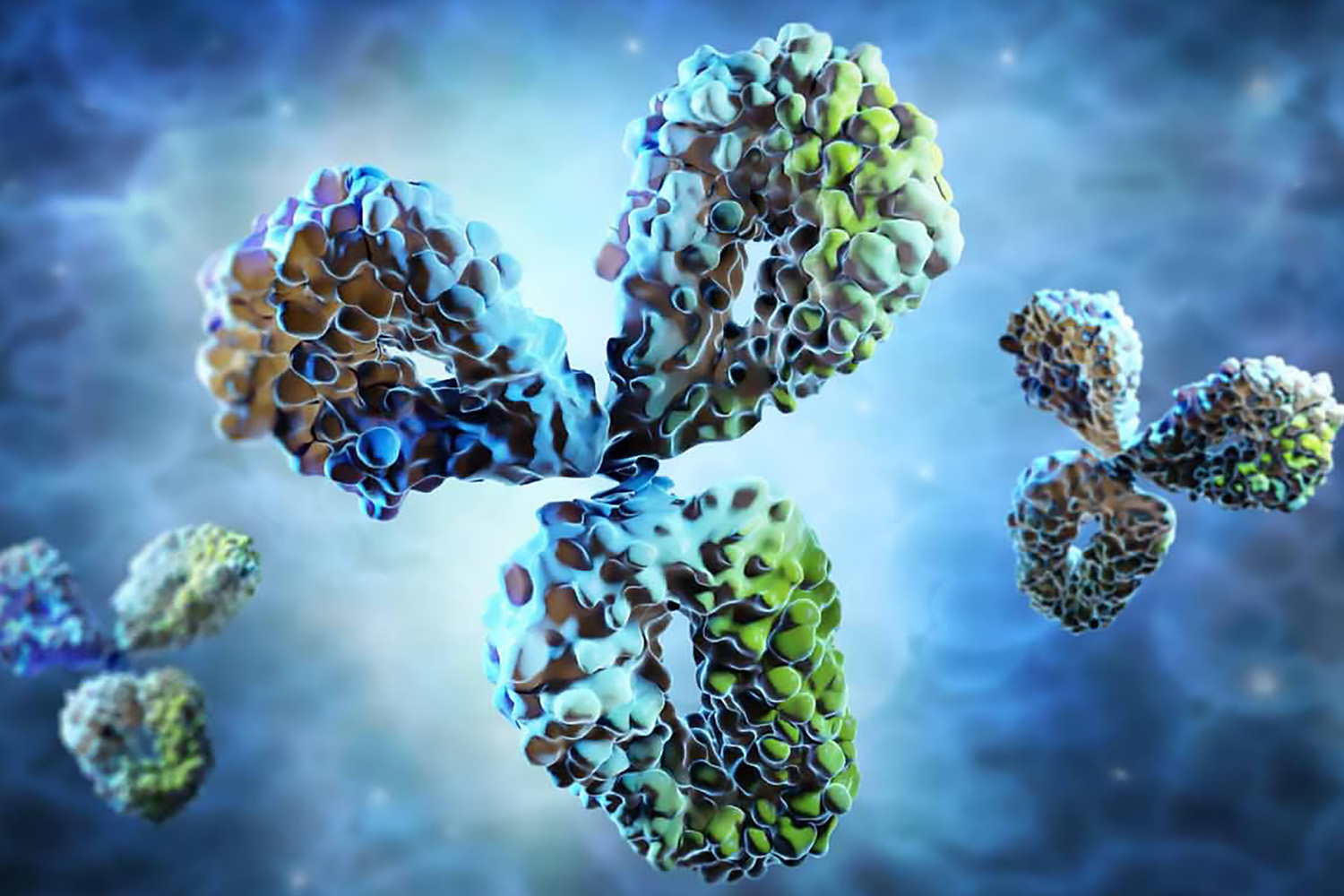
There is a quiet revolution happening in immunodiagnostics, and it’s one that could have a profound effect on how immunoassay developers and manufacturers do their jobs.
Recombinant antigens such as human Chorionic Gonadotropin (hCG) and human Prolactin have been commercially available for many years. They have simplified the tasks inherent in the development and production of assays for these analytes. For much of that time, however, there was little change in the way the antibodies needed for these assays were made: rabbits, sheep, and goats are immunized and polyclonal pools prepared and processed.
But these pools are finite; when they begin to run out, a scramble sometimes ensues for a replacement pool.
Continuity of Antibody Supply
Monoclonal made the task of antibody production somewhat easier. With proper care and storage, monoclonal antibody cell lines are effectively immortal. But there was still the problem of monoclonal antibody production, which could be done in two different ways. The classical method of monoclonal antibody production was to inject the hybridoma cell line that produced the monoclonal antibody into the peritoneal cavity of live mice to develop ascites, which is an antibody rich fluid that is produced by the hybridoma cell line.
Many European countries (and some jurisdictions in the U.S.) have banned monoclonal antibody production by ascites. The alternative is to produce the antibody in cell culture, a process in which no mice are used, but the concentration of antibody produced in cell culture is less. A million microtiter wells would require the output of about 400 500-mL roller bottles producing monoclonal antibodies in cell culture. Since sterile techniques and expensive cell culture media are required, producing monoclonal antibodies in cell culture is more expensive than ascites production.
More Efficient Antibody Production
Recent advances in protein sequencing have allowed researchers to obtain the amino acid sequence data for the binding site in antibodies. The sequencing can be done on as little as 200 ug of an existing antibody, or the amino acid sequence information can be obtained by sequencing the DNA or mRNA that codes for those amino acids in an existing hybridoma line. Once that information is known, it can be stored in digital form that is, in effect, the equivalent of a master cell bank in silico. It is also possible to insert these sequences into pre-made molecular constructs or cassettes that encode the rest of the antibody beyond the binding sites. These full-size antibody constructs are then put into large-scale cell culture in which it is possible to produce gram quantities of antibody in a few days.
Several commercial organizations and their subcontractors are providing the process described above for less than $20,000 per antibody, including the production of a gram of antibody. A gram of antibody can be used to coat five million microtiter wells under the conditions described above. The second gram of the same antibody costs significantly less because all of the discovery work has already been done. Larger lots of antibody are also possible. Since every lot of antibody used in making an assay needs to be qualified prior to use, larger lots of antibody mean that much less expensive scientific labor is needed to qualify the antibody to produce the same number of assays. By comparison, it is not unusual for off-the-shelf antibodies for some esoteric analytes to cost $1,000/mg or more, making recombinant antibodies a technology well worth considering for higher volume assays.
Enhanced Control Over Antibody Classes and Types
The companies mentioned above also offer multiple cassettes that can provide advantages in assay development and manufacturing. Mouse IgG antibodies come in four classes, IgG1 through IgG4, and they have different properties. IgG1 is preferred for making assays as it has good stability and low non-specific binding properties. IgG3 has a reputation for being sticky and is therefore prone to non-specific binding problems. But sometimes the best antibody that comes out of an immunization and fusion program is an IgG3. With recombinant antibody technology it is now possible to class switch that IgG3 to a more malleable IgG1 antibody.
It is also possible to switch the antibody species. A mouse monoclonal binding site can be cloned into a rabbit or human cassette. Mouse monoclonal antibodies have proven to be significantly easier to make than their rabbit or human counterparts. Production of humanized mouse monoclonal antibodies is of significant therapeutic interest and recombinant antibody technology is being investigated vigorously for therapeutic uses. It is one of the drivers for scaling up the production of recombinant antibodies to gram quantities.
The ability to sequence antibodies has important implications for troubleshooting antibody issues in production. For example, you may have an assay in production that requires more and more antibodies to get results comparable to those obtained when the assay was first developed. It would take months to figure out that the hybridoma cell line used to produce the antibody had become contaminated with another, irrelevant cell line that was gradually outgrowing the cell line of interest. Sequencing the antibody in question would show this problem immediately.
It is possible to have cassettes for different subtypes of immunoglobulins such as IgM, IgA, and IgE. IgM antibodies are the antibodies that first appear when an immunogen is first encountered, and they are generally lower in affinity than the IgG antibodies that eventually replace them. IgM antibodies have been used in diagnostic assays, but usually as a last resort because the lower affinity translates into poorer sensitivity. IgM antibodies have 10 interconnected binding sites in contrast to the two binding sites in an IgG antibody, and it is thought that the larger number of binding sites partially compensates for the intrinsically lower binding affinity of the individual IgM binding sites. It is interesting to speculate what a high-affinity IgG binding site cloned into an IgM cassette with 10 binding sites would look like. Would the effective affinity be higher with 10 binding sites instead of just two?
Polyclonal antibodies that have been affinity purified can be sequenced as well. The 10 most prevalent clones are immortalized in silico exactly like their monoclonal counterparts. Affinity purification is necessary because polyclonal antibodies contain literally hundreds of thousands of separate clones to the immunogens that the host animal has encountered over time. Rather than searching through this haystack for the proverbial needle, affinity purification is akin to using a powerful magnet to find the needle. This means that the “golden rabbit” that produces an antibody to a given analyte can effectively be made immortal. Some analytes are best done with rabbit antibodies. Estradiol and Leutenizing Hormone (LH) are two good examples. Estradiol immunogens injected into mice to elicit monoclonals invariably produce antibodies that recognize the metabolites of estradiol. Mouse LH monoclonals can suffer from over-specificity and can miss deletion mutations in certain populations. The ability to pull 10 different clones from a polyclonal response can also give assay developers great flexibility in crafting a blended polyclonal with specific properties and without certain problematic cross reactivities.
Conclusion
Recombinant antibody technology is in its infancy today, but already it neatly solves the problems of long-term supply of a given antibody (whether monoclonal or polyclonal) by preserving the sequence in silico. It also provides an alternative to both ascites and traditional cell culture antibody production on a scale that was not possible previously. The unprecedented control that it gives to assay developers and producers is just being explored and appreciated. Further extensions of this technology can be expected soon that are going to transform what we can do with antibodies and immunodiagnostic assays.
