
New Podcast Episode—Unpacking the FDA’s LDT Guidance: Expert Analysis and Implications

  • Insight
ALFC-25—144

Understanding the FDA’s LDT Rules and Their Impact

Join us for an important episode of DCN Dx’s Expert Insights series as we discuss the significant changes in the regulatory landscape for laboratory-developed tests (LDTs). With the FDA’s recent rule redefining LDTs as regulated medical devices and the implications of the Supreme Court’s Chevron decision, this episode is a must-listen for professionals in the diagnostics industry.

Why Listen?

This episode offers a comprehensive discussion on the FDA’s new regulations for LDTs, highlighting the phased enforcement plan and its impact on the industry. Our expert panel explores the challenges and opportunities these changes present, especially in ensuring compliance and maintaining high standards. Additionally, we examine the broader implications of recent legal battles and regulatory shifts, providing valuable insights for navigating this evolving issue and its impacts to your organization.

Note that this is an evolving issue and this recording was made on July 3, 2024; some details may have changed.

Expert Panelists

Mitzi Rettinger, Chief Revenue Officer at DCN Dx; Episode Host

Mitzi Rettinger, Chief Revenue Officer at DCN Dx, is a dynamic force in the life sciences industry, with more than 25 years of experience fueling innovation and growth across various sectors, including diagnostics, pharmaceuticals, and biotechnology. Her expertise lies in driving sustainable revenue growth, market development, and digital transformation, leveraging her deep understanding of the scientific commercial landscape.

At DCN Dx, Mitzi has been instrumental in shaping strategic initiatives that enhance customer engagement and drive market leadership. Her tenure at MilliporeSigma was marked by transformative leadership where, in her role as Sr. Director, she proposed and led the commercial organization through a digital transformation by translating the value that data and technology bring to the business. With an entrepreneurial spirit and a focus on modernization of strategy, process, and tools, she drove innovation in sales and delivered significant year-over-year growth on a revenue base of over $300M.

A trained scientist with hands-on laboratory experience, Mitzi’s leadership extends beyond revenue generation to include building cross-functional teams that deliver solutions aligned with the scientific community’s needs.

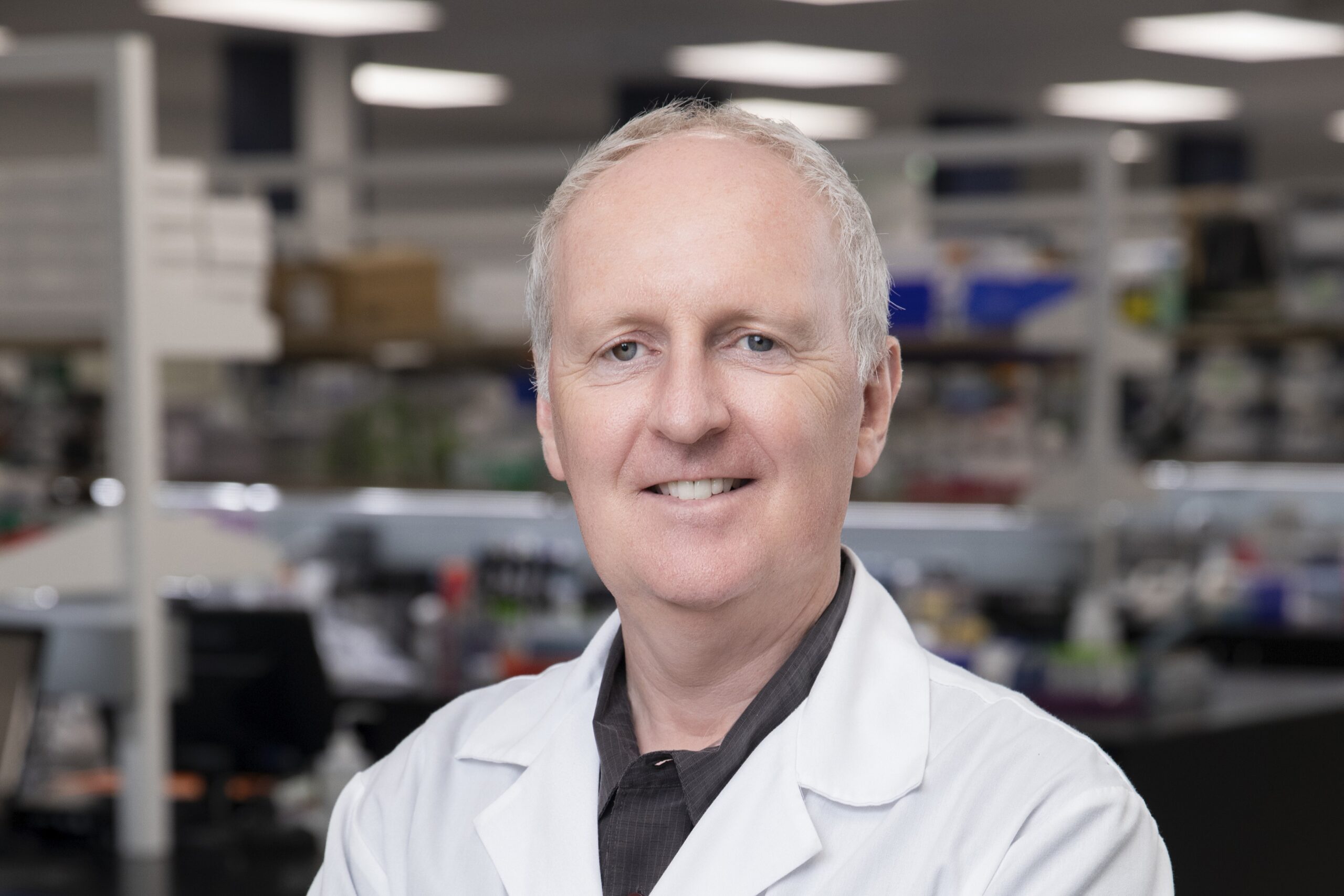
Elliot Cowan, Principal and Founder at Partners in Diagnostics, LLC

Elliot Cowan, Ph.D., is principal and founder of Partners in Diagnostics, LLC, providing consulting on the regulation of in vitro diagnostics to IVD manufacturers, as well as to international public health agencies, procurement organizations, regulatory harmonization efforts, governmental bodies, and philanthropic foundations. This followed a 20-year career at the US Food and Drug Administration, where he was responsible for leading the regulation of all blood donor screening tests and retroviral diagnostics used in the US, including the first over-the-counter HIV test system, approved in 2012.

Dr. Cowan was also a member of the Laboratory Technical Working Group for the President’s Emergency Plan for AIDS Relief (PEPFAR), providing technical assistance for laboratory quality assurance issues in PEPFAR focus countries, and advised the World Health Organization on the development and restructuring of its Prequalification of Diagnostics Programme.

Dr. Cowan received a B.A. from Williams College and a Ph.D. in Biology and Biomedical Sciences from Washington University in St. Louis.

Emily Friedland, VP of Clinical Research at DCN Dx

Emily Friedland is a seasoned professional in the field of clinical research with a special focus on in vitro diagnostic (IVD) and traditional medical devices. She has held several prestigious roles throughout her career, each contributing to her extensive knowledge and experience in the medical and diagnostics sector.

As the Vice President of Clinical Research at DCN Dx, Emily leads and fosters growth within the clinical operations teams. She excels in fast-paced and challenging environments, coordinating and overseeing various clinical research projects.

Prior to her role at DCN Dx, Emily was the Director of Global Clinical Operations at Teleflex Incorporated. She also spent several years at Singulex, initially serving as the Director of Clinical Affairs, then progressing to the position of Sr. Director, Clinical and Regulatory Affairs. During her tenure at Singulex, Emily managed the execution of clinical trial programs, including the implementation and execution of FDA registration trials and additional post-marketing clinical trials of CE-marked and FDA registered products.

Before Singulex, Emily worked at Grifols Diagnostic Solutions as the Associate Director of Clinical Affairs, where she led clinical trials and ensured cross-functional alignment in their execution. Her earlier roles include serving as Manager of Clinical Affairs at Celera and Manager of Clinical Research at Roche Molecular Systems.

Emily’s specialties span IVD, infectious diseases, women’s health, genetic testing, immunodiagnostics, blood safety, medical devices, and clinical operations. Her track record highlights her ability to tackle complex problems with effective solutions and her strong collaboration skills. Her peers describe her as a wealth of knowledge and a pleasure to work with.

Emily holds a Bachelor of Science in Biology from Virginia Tech. Throughout her career, Emily has demonstrated an unwavering dedication to her field and continues to contribute to advancements in clinical research and diagnostics.

Mitzi Rettinger: Welcome to another episode of the Expert Insights podcast. I'm your host, Mitzi Rettinger, Chief Revenue Officer at DCN Diagnostics. Today, we're diving into a topic that's both timely and crucial. Managing the fast evolving regulatory environment for laboratory developed tests, or LDTs with new FDA guidance. Follow on guidance for small entities, a lawsuit and a critical Supreme Court decision. We've got a lot to talk about today. It's more important than ever to understand how these changes are going to impact our industry. Who better to help us sort through these complexities than my guests, Doctor Elliot Cowan and Emily Friedland? Elliot is the principal and founder of Partners in Diagnostics. He brings invaluable experience from his 20-year career at the US FDA, where he led the regulation of blood donor screening tests and retroviral diagnostics, including the approval of the first over-the-counter HIV test system. Elliot has also contributed his expertise to international public health agencies and regulatory harmonization efforts, making him a key voice on LDT regulation. Emily is my colleague at DCN Diagnostics and our VP of Clinical Research. She has over 25 years of clinical research experience, primarily in the IVD space, and has held key roles at Roche Molecular and Novartis Diagnostics, now Gripples. She excels in managing complex clinical trials and fostering growth within clinical operation teams, and her insights into the practical implications of LDT regulations is also invaluable. Elliot and Emily, welcome to the show.

Emily Friedland: Thanks, Mitzi. It's great to be here and I look forward to a great conversation with Elliot.

Elliot Cowan: Thanks so much for inviting me, and I'm looking forward to the conversation today.

Mitzi: Elliot, to kick off the discussion, can you explain the key changes in the FDA's new rules for laboratory developed tests and why they are so significant to the diagnostics industry?

Elliot: Sure. This is at once a simple question to answer and a complicated question to answer. The simple version is that. This really amounts to only adding ten words to FDA's definition of an IVD, and that is essentially that laboratories are considered manufacturers of medical devices. I'm not counting here on the actual number of words, but this is the gist of what the new rule says. So laboratories are manufacturers of medical devices, and therefore LDTs or laboratory developed tests are IVDs which require regulation by FDA. That's the compact answer. I think to your question, the implications are huge. This has been discussed for many years now, with very ardent proponents and antagonists throughout the whole process. Depending upon what constituency these folks represent. Ultimately, what this means is there's going to be a lot more regulation of tests that are considered laboratory developed tests, and FDA is going to need to go through a regulatory process with them. You may have heard that the term enforcement discretion, that means that FDA really saw itself as regulating these tests that are done in laboratories. I won't actually go into the actual definition of a laboratory developed test, but I really recommend that you read the final rule, which is going to have a lot more information in it. But FDA sees itself as having regulated LDTs for quite a while and going through, again this enforcement discretion process, which means they chose not to regulate unless there have been some serious events that have taken place, adverse events that have taken place such that people have been injured or even died as a result of a test result from these LDTs, in which case it FDA will come in and look to see what the source of this is and prevent that from happening in the future. Does that help to at least set the stage for you?

Mitzi: Yes it does. Thank you so much, Emily. From your perspective, did you have anything to add there? Just from what you've observed and heard in your area of expertise?

Emily: Not particularly other than we've been watching this, as Elliot mentioned, for many, many years, and it comes in and out of favor and administration to administration. It may change right as we move forward. I've been on both sides. I've worked primarily in sponsor organizations who developed IVDs. I worked in a sponsor organization that both developed IVDs and had a CLIA laboratory that offered LDTs somewhat as a launch to determine what was important to move into the IVD space for distribution. And I understand the concerns that laboratorians have around restrictions that may come from this new regulation. So I think this is a very rich area for us to explore from both a regulatory and compliance perspective. And ultimately, I think the goal of the agency is to ensure that patients are protected and that the products that are marketed and used for our loved ones when they are tested are being all held to the same bar, and especially when it is critical to their safety.

Elliot: Emily, if I could just add something on to what you said, which was well put, FDA's concern is that the benefits outweigh the risks for a given medical product. I think people are very familiar with that. FDA cited in its preamble to the new regulation, to the new rule that it observed. In many cases, there was in some cases there were not sufficient controls in place in these laboratories, even though they are inspected by CMS on a regular basis. These are folks that run high-complexity tests, but FDA found the number of cases in which there was there were, in fact, adverse events, reportable adverse events that were associated with LDTs. And they cited several examples with as much detail as they could make public as the reason for making this change, because they saw this as a significant threat to individual health and to public health. So that's just to give you a feel for where FDA is so-called coming from, when it's trying to move this along as quickly as possible.

Emily: Absolutely. I think we both know that the background for the LDT rules was really the consideration were far less complex tests than what are now being marketed with new technology. And I understand the agencies and legislators concerns around safety. And that's what we work in every day, right? So while I see a lot of positives for this from the consumer perspective, I do also understand that this is also going to be potentially a challenge for patient care and offering of tests. So this will be an interesting conversation moving forward. Elliot.

Mitzi: Absolutely. And I think I think I'm going to ask, you know, Emily, you one more question based on some of your response there, because I'm listening, you know, to the side that is, you know, we're talking about patient care. We're talking about safety. And I think at that highest level, of course, you know, we all want to believe the only reason we would do this is for the patient. But you've got this whole other side. You know, you have the people like Quest, LabCorp, you know, that are really, you know, have great R&D labs. They're focusing a lot on quality process procedure. And I understand you also have some small startups that are pretty much offering the same exact thing. So you almost have this huge variance. And what would be a quality system potentially, and what they feel like they've achieved through innovation. So you, Emily, having kind of, you know, had your laboratory, you know, in the lab creating these tests very quickly, but also the diagnostic group that was having to get the 510(k) and even them looking at each other like, okay, I can't move anything once I get this set. And these others saying, well, you're missing out on this wonderful innovation that you can do. What is your take there? I mean, because you can see where this battle is coming from. I mean, I hear, you know, Elliot, say ten words and I'm going, wow, ten words have caused a huge uproar. So maybe give or take from both sides of that fence to kind of set a little bit of fairness in this whole thing when we're talking about why people are in such an uproar.

Emily: Sure. So, you know, from my perspective, I would say on the lab side. There has always been this innovation funnel, and there is value in local laboratories who can offer product directly to their local community or test local to their local community that serve that local community and maintain the safety and performance levels of large distributed product. But on the other side, there is that spirit of innovation in especially in the US, where there's opportunity right, to bring up a lab, offer a test, and these smaller labs may or may not. And a lot of the smaller labs have wonderful quality systems. I think what the agency is concerned about is, as I mentioned, this level playing field and assurance that everybody is producing the highest quality product and offering that to patients. Ultimately, the struggle between the IVD manufacturers that I lived in for most of my career and the LDTs, you know, the IVD manufacturers were looking at laboratories who were developing and offering tests faster, not going through that regulatory process and feeling like they were bypassing part of the process. Meanwhile, on the lab side, they have great quality control measures. They're validating these tests. They have large populations that come into the laboratory that they can test against, sometimes more so than even the largest IVD manufacturer has access to. So it's just a matter of getting those data in front of regulators to validate that those populations truly do represent the intended use population, that the proper quality controls were in place for development, and that, you know, what is being offered is truly safe and effective for patient care. If you have a loved one in the hospital. You want to know that the test that's being used to determine what path is being taken is just like you would be concerned about whatever drug is being dispensed to that loved one has been properly reviewed and is as safe and effective as we can assure before it's implemented in a patient.

Mitzi: Thank you so much, Emily. I appreciate that thoughtful response. Thank you. I'm going to stay with you on this, on this one. To start with the FDA phasing out its enforcement discretion for LDTs. How do you see the role of a contract, Clinical Research Organization, or CRO evolving in this new regulatory landscape?

Emily: Sure. Well, first of all, we have access to we have interfaced with the agency on many different products with many different types of regulatory paths. So often the exposure of to just the agency's thinking on a moment to moment basis is sometimes a good way, or is often a good way for clients to really test whether their regulatory path, where working with folks like Elliot. Whether they're plans for their regulatory path for a product, make sense, including is the data or are the data that have been collected to date sufficient? What other kinds of studies need to be done, both from the analytical side and from the clinical side, to support this under FDA regulation, versus just following the clear guidelines for validation? Often clear guidelines are perfectly fine, and that's what the agency defers to. But sometimes they want a more robust clinical sample. They want more robust data in a larger patient population. Things like that. So from that perspective, you know, just that regulatory planning is important to work with. Often a partner, if you don't have somebody internal. And then from a clinical monitoring and oversight perspective. Third party review of data collection, any kind of records can be beneficial in supporting that. You have an unbiased approach to the review and analysis of your data set. And may help the agency feel confident that the data that were collected were collected under the most appropriate conditions, and that there's no bias based on the way that the data were reviewed or analyzed.

Elliot: I'd like to add something on to that. Actually, if I could add underline some of the things that Emily said. We routinely highly recommend that a test developer will ultimately lead to a test that's going to be go through the FDA regulatory process, work with a CRO. Except not just any CRO. There are people we found who were CROs for drugs or biologics and oh, we can help you with that. Different it's just different. And so we also add on to our recommendation of getting a CRO for all the reasons that Emily had just mentioned, but also to make sure that the studies are carried out in fact, properly in accordance with the requirements for an IVD, because the studies are just very, very different. For example, in a drug or biologic, you're going to have a situation in which there's an IDE or an IND. Well, it would just be the IND for a drug or a biologic. There's not nearly that emphasis on an IVD. The other thing is you don't want to have to repeat your clinical studies. It's extremely expensive to have them run the first times, which underlines the importance of having the studies done correctly the first time. So just a little shared experience with you.

Emily: I appreciate that, Elliot, is something that, you know, part of the part of the mission of our organization is to ensure that organizations get specialized diagnostic professionals who understand the research space for IVDs, which is special. It is different than biologics and drugs. We are much more focused on the system and the data in some ways from the laboratory, on the laboratory side and the procedures related to the laboratory testing, where other, you know, picking the right CRO in this situation will be important for that exact reason. So I do appreciate that call out, Elliot. There aren't as many of us out there. And, you know, specifically, I would say really understanding that IVD studies are just as one of my former bosses at an organization said after coming from the drug side of the business into diagnostics. Her initial thought was, oh, an IVD study is just a part of a drug study. It's not. It is its own thing. There are pieces that you wouldn't consider if you were developing a protocol for a drug, or even a traditional device that you need to really be considerate of when you're developing those protocols for IVDs.

Elliot: Just one more thought while we're on this question still, and that it has to do with cost. We'll often hear from people who will approach the CRO and say, oh my goodness, they're asking a lot of money for us to do this study. And again, I would say it would be more expensive to have to do that study twice or more to get it right than spending some more. It's not insignificant. I will certainly grant that. But just from a cost effectiveness standpoint, it's going to be important to get it done right the first time. Doing it again is going to make the cost much more expensive than if you had started with someone who knew what they were doing at the get go.

Mitzi: Absolutely. Thank you both, Elliot. One thing to add, before we move to a different topic or to ask you to add to is, you know, we're talking a little bit about the whole clinical trial. But really, when we think about these groups that have come out of this, they're looking at this phase out period and they're saying, okay, what do I have to do? I mean, that's really kind of starting back at that regulatory strategy, which is also contracting out. And we might have regulatory internally. But again, it comes back to what's the understanding of the FDA's requirements versus clear. So do you have any advice or thoughts for these laboratories that are saying, okay. Where do I even start? Or what's the best path forward?

Elliot: Before I jump in, I think it's bringing on board or connecting with or ultimately working with someone who's a professional in this area. I think people have a hard time sometimes understanding exactly what's needed, especially when the quality system side, it's a bit overwhelming and that the reason for that is it is overwhelming unless you have some good guidance in that area. And if you have a culture of quality, as it's called, to make sure that things are being done correctly, thank you.

Mitzi: Thank you for that. So maybe we'll shift gears just a little bit and I'll start with you here. Let's talk about the industry's reaction to the lawsuit that was filed by the American Clinical Laboratory Association, or ACLA, that was challenging the FDA's authority to regulate LDTs. What impact do you foresee this legal battle is going to have on the implementation of the new rules? Understanding, you know, just go ahead and pull out your crystal ball, because I know no one really knows yet. But just maybe just in your opinion, you know.

Elliot: I was going to say if I pull out my crystal ball, it might explode. But it's so hard to know. Again, there are still very passionate people on both sides of this. And it's not only the ACLA challenge to the regulation. There also is congressional challenge, which exists. So there are a couple of congressmen who are also challenging the rule. And so this I think is going to drag things out. FDA does have a four-year implementation period, and that what has to be done within those four years varies depending upon the risk that's associated with your particular test, as well as some other. And there's some other exemptions and exceptions to being regulated. But because of the lawsuit and congressional activity, and that's all going to have to work its way through the system. Ultimately, what's also going to be a factor here is what the outcome of the election coming up in November. So there are all these different pieces that are in motion, along with the fact that there is so much work to be done. So it seems that the timeline that FDA has imposed upon itself. I'm just not sure how realistic that is, because there are thousands and thousands of LDTs that are going to come under this rule. In most cases, it would seem, or even if it was even a small, relatively small percentage of those cases, it's still going to be a workload which is really difficult to deal with. And just from some informal conversations I've had with former FDA people, they have some concerns also for COVID, for example, it was an all hands on deck situation, and I think they actually handled it remarkably well for the number of tests that were done that were authorized, rather in such a short period of time for something like this. Four years is just a snapshot. Even though FDA said that they are going to hire a number of people to help with this, when you're dealing with thousands and thousands of tests or tens of thousands of tests, that makes for a task which is going to be very difficult to complete. So there are some tough times ahead. I think the FDA is actually at the reviewer level, is worried how they're going to keep up with the needs for this. And if we look at what happened and in Europe with the IVDR, the IVD regulations, that's been put off many times to generate the review ability of notified bodies, of which there are very, very few. So FDA said that they're going to have folks who are going to be handling all this. Again, the numbers just make it very, very difficult to understand how these timelines is pretty rigorous. Timelines are going to be met. Also, from what I understand, FDA's funding for the next fiscal year was reduced in Congress. So that's going to cut in to the people who are going to have to be doing these reviews. User fees have been proposed as a way to deal with this increase user fees, but I would imagine that would have to be a tremendous increase to be able to get the number of reviewers.

Mitzi: So thank you so much for that, Elliot. I appreciate your insights. You know, I just read an article and the title was, Will the FDA Break Laboratory Developed Tests? Says laboratory medicine experts say cost, administrative burden and other barriers, and the final rule threaten patients' access to care. And this is for both of you. I'd love your insights. How do you think the new rules and the ongoing lawsuit and the congressional challenges are going to affect that innovation and access to diagnostic tests in the near term, or do you think it will, based on all of these things?

Emily: This is all personal opinion, right? I'm going to give that caveat obviously upfront. You know, this has been around in the ether for a really long time. So if labs weren't already thinking about this, they should have been. And I don't imagine this is always the reaction. Anytime a new reg comes down from the agency is it's going to kill innovation and we won't see new product for patients that are in need. And I think with more regulation that we've seen in the past, my over my career, the past 25 years, especially in the IVD space, we've only seen a continuance of innovation in diagnostics and exponential continuation of innovation in diagnostics. So I don't I don't think that it will stifle that what it will do potentially. Is slowdown that innovation potentially in places where patients have limited access. And then that should be a concern for the agency. That's not their goal, and I'm sure that they will keep an eye on all of those factors and pivot as needed. The agency is there for patients and to protect patients and make sure that they get the products that they need. So I think a lot of it is performative. The outcry is a little bit performative, but it is a new burden for labs. And it is confusing. Like when any new rule comes out, it's a little bit nebulous and it will require a lot of refinement over the next several years. And I liked Elliot's comparison to the IVDR, because that was going to be my next question for you, which is that's the exact parallel that I would make is we'll see this, you know, extended and refined. And I do think the agency gave a lot of room for products that are important for emergent testing, like blood donor safety, organ donor safety. Those are somewhat exempted from this new rule. And those are the places where critical care could really be stifled. So I do think that there was a lot of thought put into protecting our most vulnerable patients and making sure that health care can continue while the level of quality improves across the board. Elliot, what do you think?

Elliot: I agree with you. I think there are. Well, I know there are some exceptions for it's a terrible term, but I'll use it anyway. True LDTs. At least LDTs as they have been dealt with over the past several years, and that is for use for development that were developed and used within a single laboratory or within a single laboratory system. Which is interesting how, by the way, so that there could be innovation in that way. So for example, through a Mayo Clinic or through another Hopkins or something like that, where tests are developed and then could be used as patients come in from elsewhere. So that may help to address some of the innovation. But I agree it's there always is concern about new regulations coming on the scene. But this I think the others paled in comparison to this one just because of the enormity. Something else to mention, by the way, just in terms of how this is all come down, it takes a very long time typically to put out for FDA to issue a guidance document. And so, for example, it could be years. I was on the receiving end of trying to get a guidance done. But you know, there's other things take priority. And it just the timeline just sort of gets expanded. And eventually it is a couple of years until a guidance document can come out. There are exceptions to that and keeping up with medical emergencies and that sort of thing of course. But the time it took and the regulation will take even longer. So five years, something like that, to get a new regulation. So what we have here is a situation in which a very complicated, legally and emotionally charged document was put out for comment as a proposed rule. And then in six months, all of the comments that were received and taken into account. And then there's a final rule. So to have that done within six months is just remarkable. I just can't get my head wrapped around it that it was done that quickly. By the way, there was over 6500 comments. That granted are going to overlap. So some that we put in similar buckets but still typically FDA is supposed to respond to each of those, each of those comments. And then the agency will explain why it did or say it either did accept the comment or did not accept the comment and left it, left it as is. So. But again, the amount of time it took was just mind boggling. So I don't know why, but I'm just throwing it out there.

Mitzi: So thank you both very much for those thoughtful responses. Thank you. Here is another question. Considering the Supreme Court's recent decision, which nullified the Chevron deference. How do you anticipate this will affect the FDA's regulatory authority and its ability to adapt to emerging scientific and technological advancements and IVD and or the LDT legislation, and either of you can jump in.

Elliot: I can take a first stab, if you like.

Mitzi: Thank you. Elliot.

Elliot: I'm concerned. That's a start. Essentially what this does is it says that a given agency or up until now and a given agency within the federal government can set its own rules because, after all, they are the experts and they know their field better and what's needed to be in the public's best interest. So what this would do would say that. No. Not necessarily. We'll let regulatory agencies only go so far. But there are others who need to weigh in here. And until that happens, then the change can't be made. So I'm concerned because I think this is going to stifle innovation. We've seen this with certain drugs, some very politically charged drugs lately. Birth control. And even though FDA had a product that's been on the market for many years, would now come under the scrutiny of Congress, for example, and then they would make a decision on whether or not FDA would be allowed to give marketing authorization to drugs such as this. So there are two things that are that could potentially happen. One is political, which will prevent certain types of drugs devices moving forward, and the other is just the fact that it's going to take that extra time through people who are not necessarily scientifically appropriate, medically appropriate to be able to have these decisions made. I'm very concerned about something like this. Emily, what are your thoughts?

Emily: Yeah, I would agree with you. I think it's the exact opposite of the intent of the LDT regulation. Right. That the new LDT rules, which is to give more oversight by people who do understand product or do understand the science behind things to make decisions about what is offered. Now, what we're doing is we're saying the opposite, right? We were giving folks that may not have the scientific background are bringing non-scientific, non health related doctrine into the determination of access to health care. And that is something we should all be thinking about and concerned about.

Mitzi: I was reading through I agree with both of you. I was reading through, you know, kind of just a chat around this. You know, where people, you know, you're going to always have those people say, oh, this is great. You know, this is going to save LDTs, that sort of thing. And, and I had some a response that I really loved. You know, someone came back and they of course, had a lot of letters after their name. And, you know, it said, you know, yeah, this is great. But everybody needs to realize that this means every other decision made by a body of experts is going to be subject to judicial review by non-experts. And you know what you said, Elliot, about, you know, becoming political. I almost even think it potentially could become who has the most money because, you know, to kind of come in and litigate some of these things because some of the examples, you know, you said, okay, maybe inhibiting the ability for a product to come to market, but I almost fear just the opposite, which is allowing a product to come to market that the FDA doesn't think should. And that could be a drug or a device. And, you know, that's just because someone's pushing we have enough data or this is for, you know, somebody really wants to have this drug for this particular indication or this diagnostic. So I think there's a fear on both sides of that. And I think the thing that I wrap my head around is just a non-expert making a decision. That's scary to me too.

Elliot: I agree. Yeah, Mitzi. Excellent points. People have every right to be concerned about this for precisely the reasons that you just outlined so well.

Mitzi: Yeah. Thank you. There is so much more we could talk about. And I know I could discuss all the ifs, ands and buts for hours, but to kind of wrap this up, is there any closing words that, you know, either one of you would like to add to this topic that maybe I didn't ask a specific question, but just, you know, you would like to share with the audience as far as your thoughts overall and really kind of a takeaway

Elliot: I can share with you a question that I've gotten on multiple occasions. And it's a very as we started out, you know, simple versus complex and that sort of thing. And the question is, what should I do? Yep. I'm meaning a manufacturer. I'm meeting someone who has is using LDTs. And it's a very, very difficult question to answer because there are so many different things. As we talked about over the course of our conversation just now. That. It's just hard to know exactly what direction this is going to take. Could it end up as a more modern, like a modified version? So there might be the. Will the timeline be extended? Sorry, I'm answering your question with a whole bunch of other questions, because it's such a difficult environment right now to understand what is going to happen. Another question is, should I start to assemble packages for the FDA and to move my product forward? That is probably the safest thing to do right now. Identify your biggest tests and make sure that they're meeting the requirements of the new rule. But then again, that costs a lot of money. And what if it turns out not to be necessary in the end? It's just such a it's volatile. I mean, that's that's the best word I can use right now.

Mitzi: Emily, I'm interested to hear what you have to say.

Emily: No, I would agree. I think, unfortunately, the takeaway is we still don't really know the answers. Right? This is a very new document and it is being litigated publicly. It will be probably years before we see what it really looks like in total scope. So I'm hoping that we have more opportunities for touching bases on this and keeping up with it. And I would say that for anybody that's listening to this podcast, that you should just keep watching this space because it is. Very active and will change for sure. The one thing we can be sure of is that things will change, right? True. In life. Especially true in FDA guidance. So I would say just to be not to panic, but to start being thoughtful about what is your path and ask questions of people who do understand as much as possible kind of this background and the traditional paths for it. Because more likely than not, a large percentage of products will end up on some sort of traditional IVD path, which can be simple or complex depending on the product. So just keep your ears and eyes open and keep asking questions, and I will. As well as asking Elliot questions, which I do on similar basis. But yeah, that would be my you know, the main takeaway for me really is we don't quite know yet what this is going to look like in a year from now or four years from now.

Mitzi: Thank you both. You know, my main takeaway is the same. Emily, it's you know, this is a fast evolving topic. What we shared today is probably going to be outdated tomorrow or something new will pop up. But you know, my recommendation again, very similar. If our listeners are interested in learning more. FDA is going to hold additional webinars on specific aspects of the rule targeted enforcement discretion and other matters that are applicable to IVDs, including the LDTs. And so, to reiterate what Emily said, keep watching the space. You know, not only FDA, but all of these organizations like ADLM. They're going to launch various webinars or have different blogs that will help all of our listeners know what's the latest and greatest, and especially since it is so complex. So I really appreciate and thank everyone for joining and hope you enjoyed this session. A very special thank you to Emily and Elliot for all of your thoughtful insights and your expertise. It is genuinely been wonderful chatting with each of you. So thank you for joining me today. EMILY Thank you. ELLIOT Thank you.

Subscribe to the DCN Dx Newsletter

Get in touch

3193 Lionshead Ave
Suite 200
Carlsbad, CA 92010
USA

No products in the cart.

[biospecimens_menu_source]