New Podcast Episode—2024 Review and 2025 Predictions for Lateral Flow Diagnostics

  • Insight
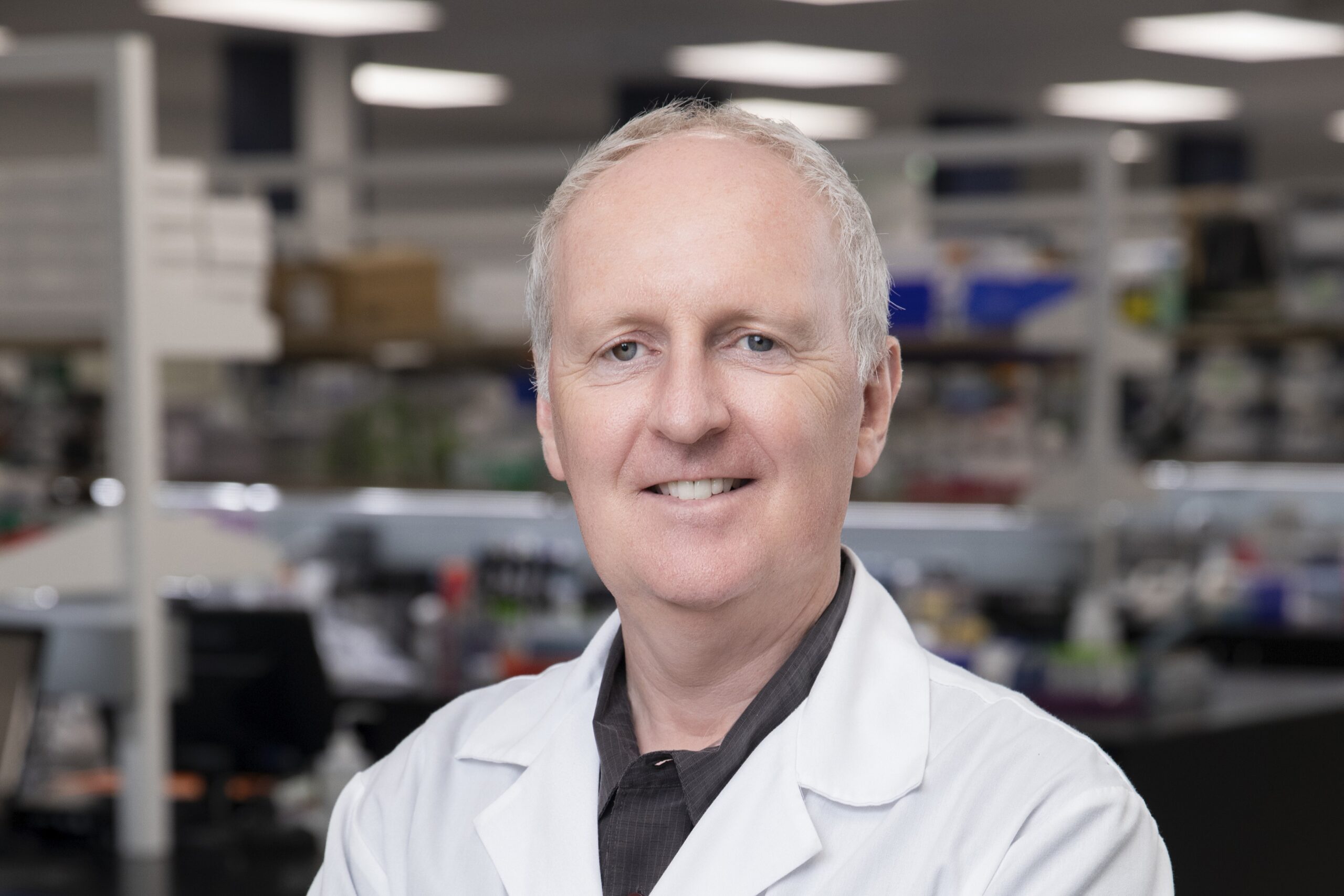
Candids-28-scaled
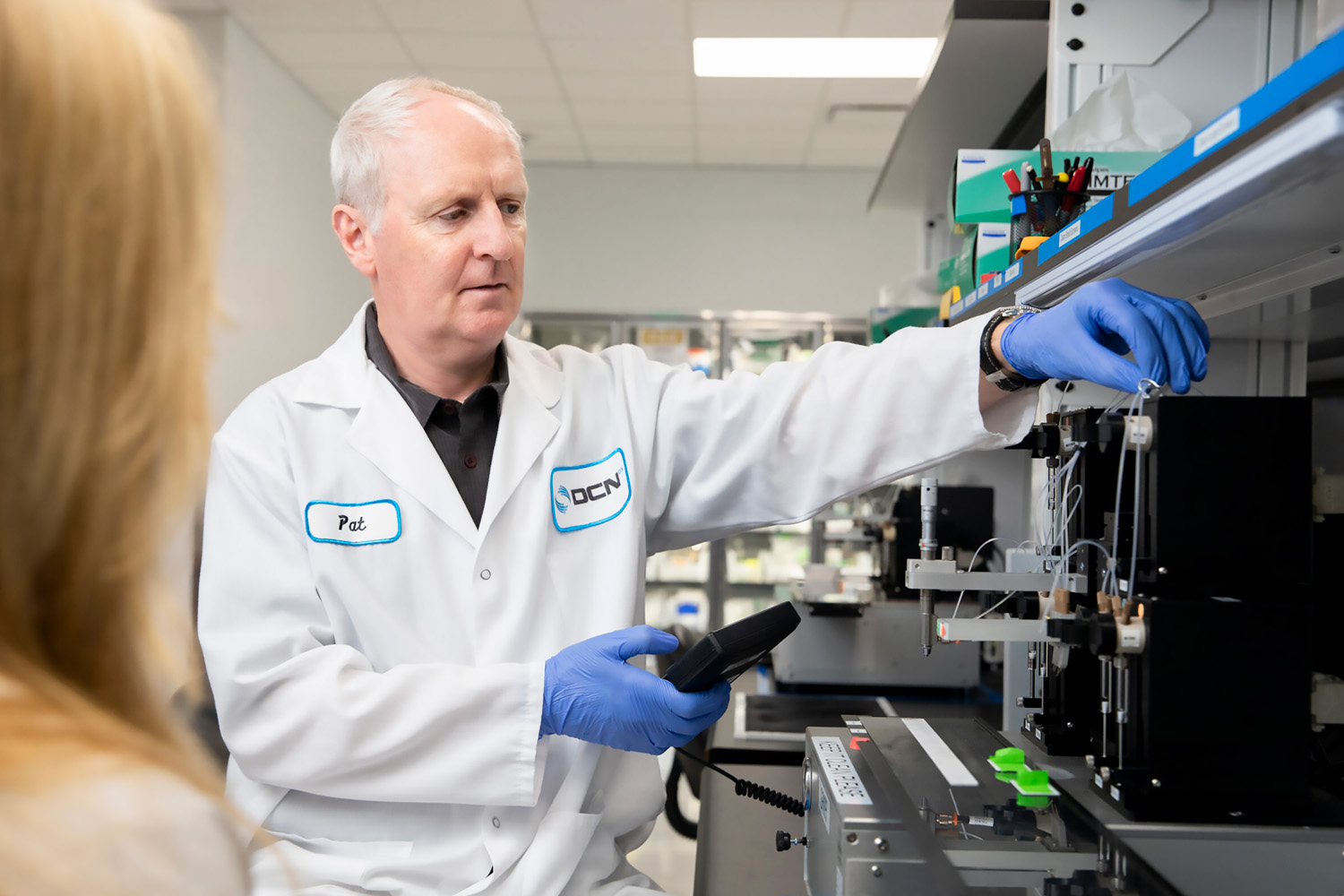
DCN Social Post Podcast Expert Pat 3
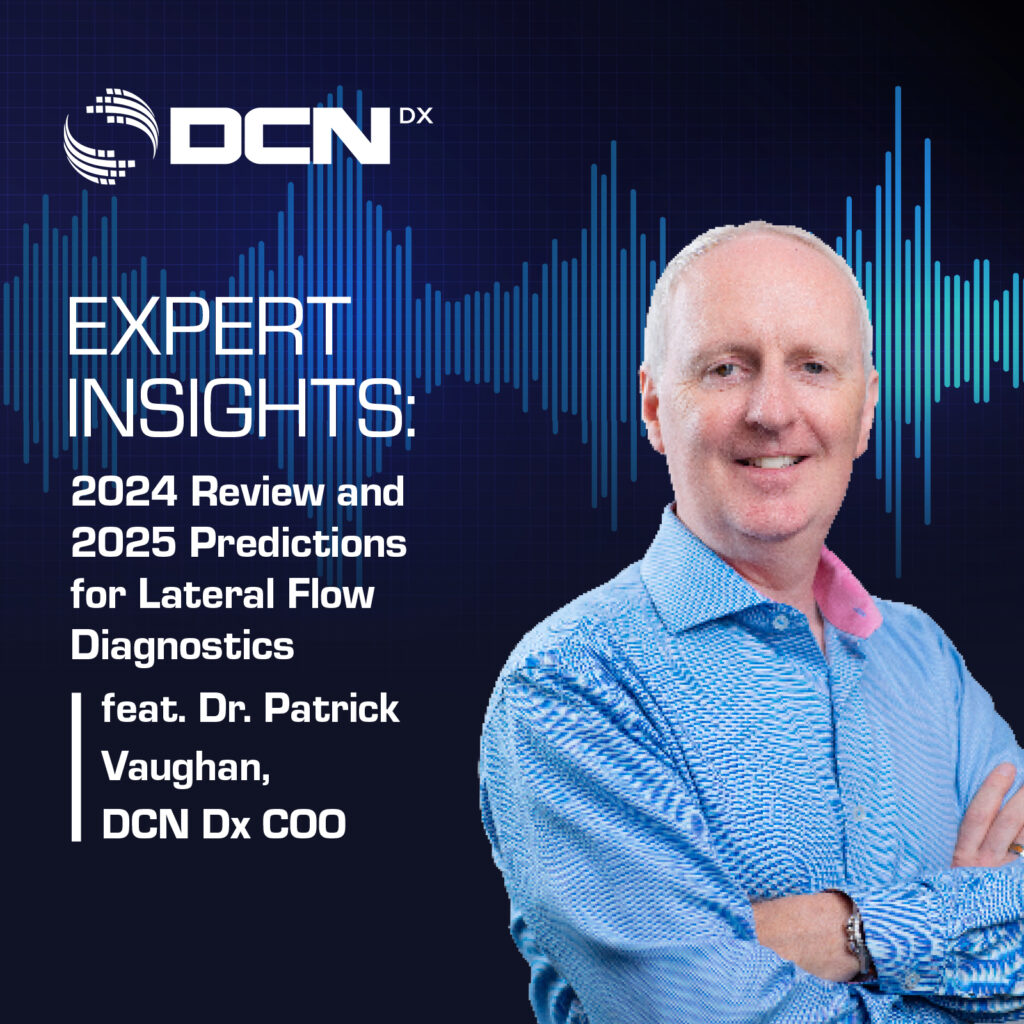
New Podcast Episode—2024 Review and 2025 Predictions for Lateral Flow Diagnostics 2

What trends shaped lateral flow diagnostics in 2024? What innovations and challenges lie ahead in 2025?

In this episode of Expert Insights, DCN Dx’s Chief Revenue Officer, Mitzi Rettinger, sits down with Chief Operating Officer Dr. Patrick Vaughan to discuss the latest advancements in lateral flow, from decentralized healthcare and AI-driven diagnostics to sustainability efforts and regulatory shifts.

Looking ahead to 2025, Dr. Vaughan shares his predictions for regulatory harmonization, expanded use of sustainable materials, and breakthroughs in personalized medicine. He also discusses the challenges and opportunities for startups versus established companies and what regulatory shifts might mean for the industry.

This episode is packed with insights that will help diagnostics developers, scientists, and industry leaders understand where the market is headed and how to navigate the evolving landscape.

Listen below, or find us on your favorite podcasting platform.

Mitzi Rettinger: Welcome to Expert Insights, the DCN Diagnostics podcast, where we explore the latest trends, challenges and opportunities and diagnostics development. I'm your host, Mitzi Rettinger, and today we're reflecting on an eventful year in the lateral flow diagnostics space and looking ahead to the exciting innovations on the horizon for 2025. Joining me is Dr. Patrick Vaughan, Chief Operating Officer at DCN Diagnostics and a leading voice in diagnostics development. Dr Vaughan, thank you for joining us.

Patrick Vaughan: Thank you Mitzi. Excited to be here and look forward to looking back on the on the last year and obviously looking forward to what 2025 and onwards has in store for us.

Mitzi: Great. Well, before we get into all the details, let's start with an overview. What trends define lateral flow in 2024?

Pat: So I think all in all it was a very positive year. I think we continue to grow in point-of-care diagnostics post pandemic. So I think the general point of care market grew from something like up to $40 billion, and I think it's supposed to hit something like $66 billion by 2029. And within that point of care, the lateral flow diagnostics sector is supposed to account for around 10 to 15 billion. You know, it depends on what report you use, but it is a significant chunk of that point of care market as well. So excited for what that holds in store for us. And then I suppose a few key things stood out to me over the last year or even, you know, over the last 2 or 3 years in general as well, is that really there is a big shift towards decentralized healthcare? I'm pretty excited about that. You know, more and more of the point of care is moving towards home testing and away from, you know, reference laboratories and even away from the doctor's office, for that matter, as well. Moving towards the end user and meeting both clinical and I would say consumer needs as well. That's really good. And, you know, I think the pandemic has really sparked energy into that whole effort as well, moving away and people taking control of their own health care as well, you know, right towards self testing and so forth as well. And obviously, you know, COVID testing led the way there as well. So, you know, we kind of joke about it in one sense as well, is that there are not many untrained users out there. If you're doing a CLIA-waived study these days as well. So that's changed public perception of point of care as well. But, you know, I suppose one important thing is we decentralize medicine like that as well, is that there's an onus on, I think, assay developers as well as to make sure that, you know, it's game on. We need to develop very, very good tests because the last thing we want to do is having an end user, like a home use user second guessing a device. Okay. So they must be really well developed and be very, very intuitive. That'll drive that whole area. One of the other areas obviously is the introduction of digital technology. And I guess the digitalization of healthcare, which enables real-time data sharing and obviously leading to better and enhanced diagnostic accuracy as well. And, you know, we can use our smartphones for that with, you know, smartphone based readers, you know, suddenly taking qualitative data and making it quantitative. And of course, the whole revolution in artificial intelligence and machine learning, obviously, that's really driving a lot of image analysis to improve the sensitivity of diagnostics. And of course, behind all of that then, is within the industry that whole drive towards use of biodegradable materials and obviously energy-efficient production costs as well. So that's kind of sitting behind everything we do as well. So exciting times, a lot of development in those areas and a lot more to come.

Mitzi: That's great. Those are certainly impactful trends. And I wanted to interject in a few things just based on what I've heard in the industry. But I think we could do that. If we stop and we break them down, let's just break each one of them down. Starting with decentralized healthcare. And maybe I can throw in a few questions for you as we go along. But how is it shaping the future of diagnostics? And do you have an example of a device that may inspire you?

Pat: Yeah. You know, as I was kind of sitting back and thinking about this podcast and stuff as well, you know, and looking at what happened over the last year and stuff. I honestly think this whole decentralization of healthcare is very, very exciting and there's a lot of stuff. And I was actually when I did a little bit of research into it, I was amazed that some of the stuff that's going on that, you know, I don't necessarily interact with daily, but it's there a lot of effort going on that's really reducing our reliance on centralized labs and even going to the doctor. Obviously, the physician is still very much an intricate part of it, but you don't have to be sitting right in front of your primary or even secondary physician for that matter as well. Which leads to, I guess, ultimately faster decision making and ultimately treatment as well. So if we look at portable diagnostic devices like so, your typical point-of-care devices that where you're tested. Now you can be tested at clinics, pharmacies and at home basically. So we know for a long time, you know, blood glucose monitors, they've been around for a while, but they keep improving, you know, in the whole area of diabetes management. Obviously, we all know of HIV testing and home testing, especially with oral fluid. But more recently there have been a lot of advances as well in other sexually transmitted diseases as well. Like syphilis testing. So part of the algorithm can now be done at home, which is an amazing step forward as well. And you know, from what we hear in the industry, there's a lot more happening in that whole area of sexually transmitted diseases as well. And of course, in that, you know, in that same group of, of, of testing is obviously your COVID testing and in fact all your respiratory testing as well. But, you know, that's one aspect, but I think there's a whole other slew of areas within this decentralized healthcare as well. So you're telehealth. Okay. So you have telemedicine providers offering urine and blood collection kits. So the likes of LetsGetChecked and Everlywell, you take your sample at home in the privacy of your own home, ship it off and get the results later. There are other companies like TytoCare which are offering. Basically, it's like they send you a packet with some vital tools that help a physician remotely. So they send you high quality instruments that can listen to digital sounds of the heart and lungs and even take digital images and videos of your ear or throat and skin. And project that back to your primary physician. So now you can be monitored remotely. And I think that's pretty awesome. And then obviously the wearables, everybody has their smartphone, their Apple Watch or their Fitbits that are monitoring their heart and stuff like that. They're getting pretty clever these days as well in what they can monitor. And obviously then obviously you have your glucose, your continuous glucose monitoring from Dexcom and, you know, the FreeStyle from Abbott and so forth as well. And then a couple of other areas, I think, you know, we've kind of forget about like mobile clinics, that is still decentralization of healthcare as well. So you have a lot of very, very good and pretty snazzy equipment. Mobile-y getting to where it's needed as well. And then obviously, you know, moving further and getting like amplification technologies right into the home as well, especially for the respiratory. And then you have at home ECG machines, okay. From companies like KardiaMobile, which is pretty interesting. One of the really interesting areas that I came across is delivering potentially your sample collections or your medicines through drones. So there's a company actually called a Zipline that actually delivers. It can deliver blood samples or vaccines, say, in remote parts of the world, but also here within the USA, it's got not FDA gear, but it's got FAA cleared. So the Federal Aviation Authority has cleared use of these drones for the Zipline to basically deliver health care to remote locations. So I think that's pretty fascinating. And then finally, when it all comes down to it, even our clinical trials are being decentralized these days as well, where we are now sending home use collection devices. Take your sample at home, then that goes back to central location for analysis and then remote monitoring of the subjects within a clinical trial as well. So really decentralization, I think it is revolutionizing healthcare and making it more equitable and efficient for everybody, and really tailoring to the needs of the patient in both remote and underserved areas and populations as well.

Mitzi: Those are all really great points. Pat, when I first started thinking of what are the simple point of care devices that could be at home. The first thing that came to my mind is I have plenty of friends and relatives that have to get routine testing for, you know, different conditions, and they're having to go in and get, for example, calcium checked, you know, on a routine basis, you know, for parathyroid or, or something like that. And I thought how great it would be is if they had tests at home that they could just check and send the results in. And if they have to make a decision or a change, they can. And, and I think the easier, the more economical the tests can be, the more likely we're going to keep people at home or even better, send them home earlier from the hospital. You know, thinking about immunosuppressants, you know, people who have transplants and how long they have to stay in just to monitor the therapeutic drug monitoring. If we could have simple point of care devices that they could check these levels daily without having to go in. It just seems like it would really make quality of life for them so much better. So I agree, it's pretty exciting.

Pat: Yep. Pretty exciting. Let's move on to digital integration. What advances have stood out this year to you? You know, I think if you just look at lateral flow, point of care diagnostics and lateral flow alone, I think there's been a huge shift in again, general acceptance of readers for that, for digitizing your information, be it a standalone reader and even smartphone readers as well. So these are becoming highly customized standalone and allow users now to get semi quantitative or even fully quantitative results from tests that were traditionally, you know, yes or no qualitative answer. So I think that's really growing in importance. And obviously with the addition of that digitalization of your diagnostics, that does lead to improved diagnostic accuracy. It takes the subjectivity out of things as well. And then obviously it enables real-time data sharing of your data, either for epidemiological tracking, but also most importantly then for disease management and ultimately for quicker treatments. So I think that's very exciting and very important. Obviously, you know, the use of, say, smartphones with respect to the regulation of them. I think that story is still evolving. Obviously, during the pandemic, we did have EUAs for certain smartphone applications like the Scanwell, and stuff like that as well. But nothing has gone through to full 510(k) approval. But you know, a lot of people are working in that area and I think the industry will figure it out. The industry, along with the regulatory authorities, will figure out how do we always use a validated device. So it's just a matter of time. We have a lot of very clever people out there. I'm sure we'll all as a community figure out how to do that. And then obviously, you know, digitalization of results like that. But then what do you do with that data? And I think the use of artificial intelligence and especially machine learning, especially in image analysis, I think is going to be huge, both from the point of view of helping us as assay developers develop a better tool. So let's say when the reader or the smartphone goes out and is used in the field, the data is going to be much better, because we'll have better algorithms, because we'll have used the power of AI during development, not just at the point of the person using. And their device has AI, but really as a tool for developers as well. And I think that's a very important point. Everybody thinks AI is going to be you have it in your hand, but it's more as a tool in development. I think we shouldn't overlook that aspect of it as well. And then the use of AI is growing as well. Very importantly, I was reading some very interesting stuff about how the FDA has approved a device called the DermaSensor, which is an AI powered device that helps primary care physicians detect skin cancer. Right. So it's a handheld device that uses light to analyze skin lesions. Okay. So very powerful tool. And then even apps on your phone like an app called SkinVision. You can take pictures and it'll detect melanomas by analyzing photos. Now the photos it's transferred, there is obviously a physician input into it somewhere along the line, and it's closely monitored. But that is truly a picture on the phone going back to a central database and coming back with them, at least the initial diagnosis as well. So I think very, very important. Obviously, you know, there'll be a lot of debate around AI. We're all trying to figure out what it does, how much it can do, and obviously then make sure that it's correctly regulated and policed as well, that it's not abused in any way as well. But I think there are important developments that will come throughout the industry over the next few years. I mean, it's happening now. So this is this is very much a real thing that's happening today and onwards.

Mitzi: Great. I, you know, listening to you, you talk about data transfer, data transfer and I'm thinking data privacy, cybersecurity, data privacy is certainly a hot topic. And when last year, at Next Gen Diagnostics conference, the FDA spoke on the importance of cybersecurity and devices. And, you know, that's going to, of course, include whether they're using AI, machine learning, maybe even just algorithms that we've put together ourselves. But they made a point to say that there's going to really be a focus on this from the agency perspective. Especially since the new updated guidance was released last year. I'm thinking of all the great things that you said. I think using readers in general, that's really upscaled LFA. There's been this whole let's just LFA, what can it do? It's just a plus or a minus. And I think the readers have opened up the market a lot larger than it had been. I mean, people thinking of doing cardiac, you know, some very serious diagnostics using lateral flow. And I think that's pretty exciting. You know, and it does expand that market quite a bit. But when we start talking about switching over to AI and then say, okay, now we're going to incorporate AI. Well, all right, that's great. I loved your comment on using it in development. You know, in some of the conversations that I've had with different people, I've even heard people say, well, wait, we're still working through the algorithms. We're working through the science to determine clinical utility. Even so, being able to use that as part of the development to really say what we're doing and monitoring, is this going to translate? Is it really going to make a difference? Because we all know when you start getting to these biomarkers, we're complex. I mean, it's pretty complex and it's pretty exciting to know that we might be able to use AI to try to find things that maybe were harder for us to identify all by ourselves. So that's great. So reining myself back in here, back to that kind of cybersecurity data privacy. What steps do you think that developers need to take to really address these challenges and prepare themselves for submission, as well as post-launch continued support? If we're using AI, if we're using readers smartphones, what do you think they should be thinking about?

Pat: A very important aspect of everything. Again, as you said, with the digitalization of everything, that's creating a lot of data, both, you know, during development, but obviously in the field as well. And I think the first, most important thing is having ethical data sharing practices. That's absolutely critical to everything. And that starts with the providers, the diagnostic providers, but also their developers and people like DCN that develop assays and readers for people as well. It's foremost in our mind as well that we must prioritize, you know, data protection in that way. And that starts everything from just informed consent, right, in a clinical trial, right through to data security, and then ultimately compliance with the regulations like GDPR and HIPAA and so on. While the revolution in diagnostics excites many people. I think that widespread data collection and sharing of the data raises significant privacy concerns. And I think you mentioned cybersecurity. That's huge. And you know, anybody like DCN when we're developing our readers here, it's a huge undertaking now. And, you know, rightly so. The FDA has produced, you know, fairly decent and detailed guidance documents on cybersecurity where, you know, they need to be followed. It's sure it's very taxing for sure, and it requires a lot of resourcing to implement proper cybersecurity. But I think it's going to be absolutely paramount that it that it's done and implemented well. But obviously then it has to be done. And I think we'll all be getting better is that it has to be implemented and maintained in a very cost-effective manner. So that's very important. And then the use and integration of machine learning and AI creates a further responsibility on us all for protecting that data, because we know the vast amount of data that's needed, but also that's computed with those techniques as well. And that's obviously a huge target for cyber attacks as well. So I think it's really going to put an onus on some, you know, very critical encryption protocols that will have to be used for all aspects of data collection, data transfer, storage and so forth as well, so that we don't have breaches and people's very intimate data gets into the unsavoury places basically as well. So we have to be very, very careful. So I think we all have a role to play in that, in protecting our privacy and our, our own personal data.

Mitzi: You know, Pat, I listen to you and I agree with everything that you've said. What popped into my mind that one more thing when we talk about cybersecurity and we keep saying data privacy, data privacy. And then you said cyber attack. And I don't necessarily always think of data when I think of that. And I can remember there was a story maybe it. A movie or a book where it was about med devices and people hacking in. That could basically really make the medical device faulty. And so I'm thinking of the same thing. If you've got these critical diagnostics that people could break in and hack in and potentially change algorithms or change the data such that the device that could be life threatening if the wrong number popped up. You know, how are we protecting that? So I think it goes beyond just privacy, but also security and ensuring that people can trust the results that they're getting and also know that their data is correct. It's not just at a hospital that there are databases, because as we just said, we're decentralizing healthcare. So everybody is providing and introducing that information along a very long, intricate pathway. So the points of entry are multiple basically. So everything needs to be secure along that complete chain. PAT Agree.

Mitzi: Let's talk about sustainability. It's exciting to hear about biodegradable membranes, bio-compostable cassettes, eco-friendly manufacturing. What's driving this focus towards more sustainability and in diagnostics?

Pat: It's been an idea and I suppose a target for many, many years, but until recently it was very cost-prohibitive as well. Right. So I think maybe also with the pandemic. So maybe before that, typically we had a lot of HIV tests and malaria tests, hundreds of millions of tests being produced a year and used obviously all using plastic, plastic housing and stuff like that. Where did all that plastic go? You know? So and then obviously, with the advent of the COVID pandemic, even more disposable diagnostic tests, creating even more plastic waste as well. So there has been a huge drive towards degradable plastics. And what I'd like to point out as well is it's not just about degrading plastic, degrading plastic, you still end up with plastic. I think it's the bio-compostable materials is the key because that will be truly decomposed. You're not dealing with plastic anymore. You're dealing with regular organic waste basically. So that's going to be hugely important. And there is a big drive. And there are now some materials that are available that really perform, when designed correctly, your cassettes and your cartridges for your, let's say, your lateral flow can perform the same as a plastic one. But you know, it requires a lot of ingenuity and good design as well. But that is. And then all the other parts of the of the test, like the backing cards, some of the membranes, the pads and so forth. All now people are, you know, there's a heightened awareness of the amount of this that's going into the environment. And people are very, very conscious. And I think obviously cost is a huge thing as well. So I remember a few years ago when people, our clients came to us and wanted to look into it. We certainly did. But you know, the. Your system wasn't set up right then because everything just seemed to be more expensive. So it was a very costly undertaking. But now that the barriers are down there, I think and obviously the cost is probably equivalent and will become the same as anything else going forward. So I think that's a that's an exciting aspect going forward. And I think in the EU that's a that's a big initiative as well. There's a big drive for stricter environmental requirements on medical devices and that will expand right across the globe for sure now.

Mitzi: Absolutely. You know, I think about we talk about decentralized testing, getting more testing at home. That's just potentially more plastics being thrown away on a daily basis because we're able to take care of that ourselves. And when we think of wellness testing or even hormone testing, sometimes those tests can be done every single day. And so that is one test that's going into the waste bin each day that would collect. If you think of how many people might be interested in doing that and after hearing how many people want to start monitoring their glucose every day and after they eat, I can see some of these other tests becoming more and more popular as they're on the market. So certainly something we should all think about. I think it's the responsibility of all of us to watch that and make sure we're becoming more sustainable as an industry. So I love that, that input. Now we're officially into 2025. Pat, what's on your wish list? You know, what do you predict is actually going to happen in 2025? Do you see shifts in regulation that could affect certain sectors? Go to customer global strategies. What do you see. What's your wish list?

Pat: Yeah I suppose I have a wish list. And I have a prediction of what might are at least what I think may be happening as well. So I think the wish list, we've covered them in some detail already, but I think the broader integration of diagnostics with a digital ecosystems, I think, you know, and then linking that to your electronic health records and stuff like that as well. So I think that's going to grow. That's going to be very, very important. Obviously, we mentioned more sustainable materials and processes in providing and developing both lateral flow assays and full on point of care more, you know, single use or disposable diagnostics as well. I think that's going to be very important. And then I think continuing the expansion into emerging markets for diagnostics, and that really has to focus on affordable and high-performing diagnostics, both for low-resource settings and remote settings. And, you know, I think we shouldn't overlook everybody. You know, a lot of it, we tend to say, oh, well, this is for low-resource settings. But I think importantly as well, it's for remote settings. And we have a lot of remote settings even within the USA. Right. So there's a lot of people within the USA do not have access to good healthcare because of geography. Sure. It's some of it is socioeconomic, but a lot. Often is geography as well. You know, we're closing smaller rural hospitals and stuff and clinics and stuff. So people have to travel further. But now if we can send a drone for their sample or have a mobile clinic or have more connectivity, at least they can now start getting that primary care. And even in some instances getting secondary care as well, which is very good. So I think that's going to really empower and promote a good health care worldwide. And then I suppose for other predictions in the future, I think we are striving for more harmonization for regulations around the globe, be it in the US, EU and I think, you know, all stakeholders, stakeholders are starting to align on the standards for these devices and both for approval and then obviously market access. I think it's going to be very interesting what happens in Europe, for instance, with the new IVD regulations as well. Mitzi, you and I were in Germany at the end of the year as well, and we spoke to many people and many European companies that are very concerned with it, because there are a whole set of new regulations, but it's turning out to be very cost-prohibitive for them as well. And there's only a certain amount of notified bodies available as well. So that's turning out to be a huge challenge and hurdle for many, many people. And you know, the ironic thing about it as well is it's almost pivoting everything. Previously everybody said, oh, well, let's develop a product and let's launch CE mark and launch it in Europe first, and then we'll come to the USA. But I think that's pivoting. I think now the more predictable approach will be to go and bring it to the US market and get it. You know, FDA regulated, put it on the market and then think about IVD as well. So that's a huge change. And I think that's going to be a very interesting for want of a better word, a very interesting phenomenon as well. And you know, we're going to watch that carefully as to how that unfolds, where CE mark becomes a secondary consideration rather than the primary consideration related to that as well. But in the whole area of wellness diagnostics and personalized medicine, I think that's going to grow more and more, be it through, you know, advancements in wearable technologies at home, diagnostic tests at home sample collection, and really empowering patients to take more a more active role in managing their health. So exciting times.

Mitzi: Those are absolutely exciting predictions. And I think, you know, as the year unfolds, we'll continue to learn more and more as it all advances. So before we wrap up, let's talk about the Advanced Lateral Flow Conference 2025. What can attendees expect?

Pat: Alright. So well it's scheduled for October 2025, in La Jolla, which is one of my personal favorite places. And I think it's synonymous with San Diego. So I think, you know, that's important. Conference will feature many, many sessions on some of the subjects we touched, obviously on biodegradable materials. I think last year that was a very hot topic and created a lot of discussion, and I think we're going to definitely continue that. Obviously, digitalization of medicine and diagnostics, the application of machine learning and AI is going to be very important, especially for, as I said, both for development and optimization, but also the use in the field as well. So I think that's going to be very good. And then obviously DCN will be showcasing what we do and our insights into the future of lateral flow, be it from material suppliers, funders, developers, manufacturers and so forth. So I think it's going to be a very collaborative and very informative conference for basically for knowledge sharing I think. So that's going to be key. So I'm very excited for that. And I don't want to wish the year away. But I am certainly looking forward to October.

Mitzi: So am I. Thank you so much, Dr. Vaughan, for sharing your expertise and insights. It's clear that 2025 holds incredible promise for lateral flow and the diagnostics industry. And thank you to the listeners for tuning in to Expert Insights. Don't forget to subscribe and we'll see you next time.

Subscribe to the DCN Dx Newsletter

Get in touch

3193 Lionshead Ave
Suite 200
Carlsbad, CA 92010
USA

No products in the cart.

[biospecimens_menu_source]