


Dan Simpson and Emily Friedland explain which diagnostics may qualify for FDA’s Breakthrough Devices Program, what evidence supports a request, and how designation can help with development and clinical study planning.
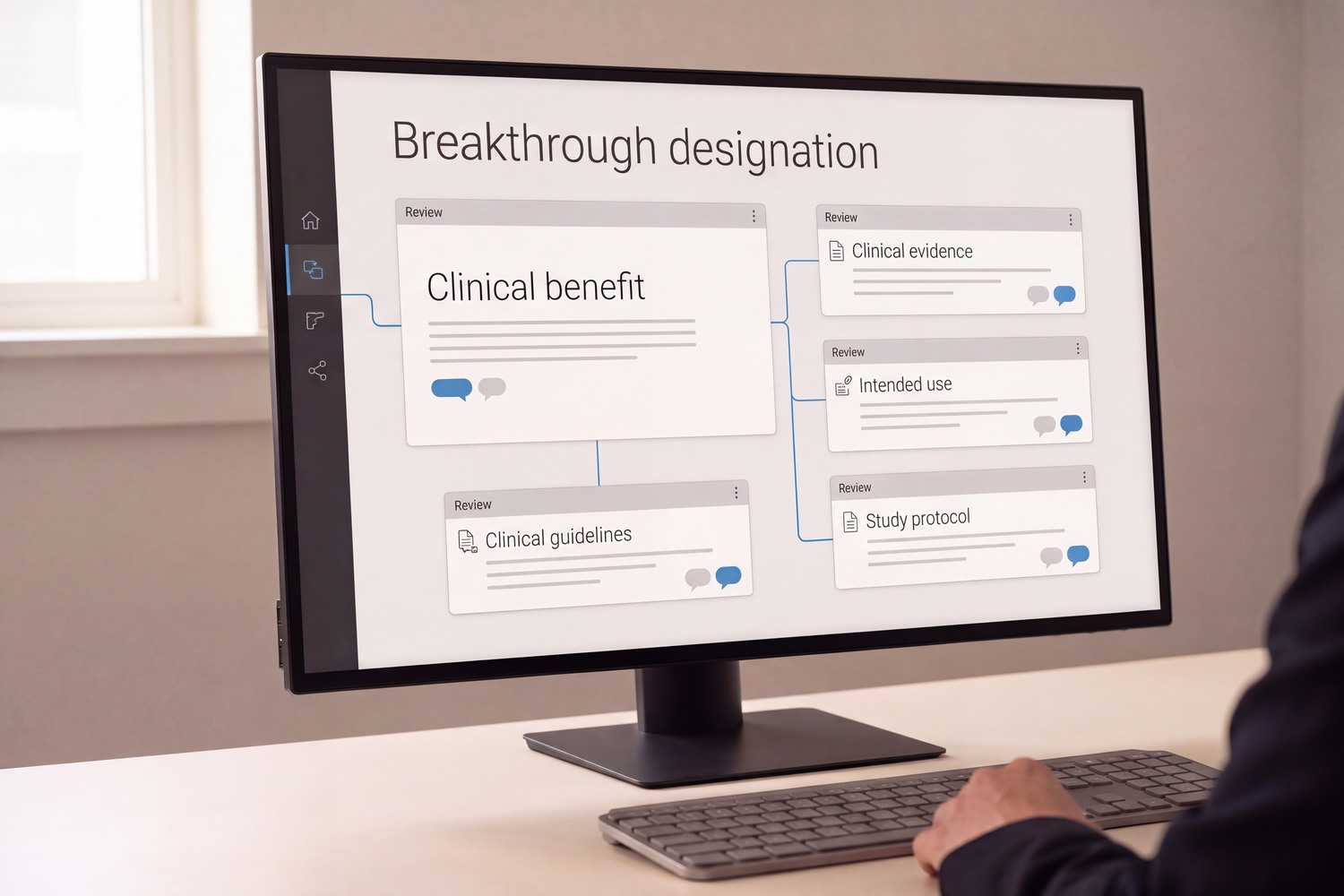
FDA’s Breakthrough Devices Program is intended to speed development and review of qualifying devices that could provide more effective diagnosis or treatment of life-threatening or permanently disabling conditions. Designation gives developers priority review and more opportunities to work with FDA on study plans and evidence needs. It does not authorize a test for sale.
In this episode of the Expert Insights podcast, Dan Simpson, RAC, Director of Regulatory Affairs at DCN Dx, joins host Emily Friedland, VP of Clinical Research, to discuss how to assess whether a diagnostic meets the criteria. Dan explains how clinical guidelines and early performance data can support a test’s potential benefit over current care, which evidence belongs in a request, and what he looks for in FDA’s follow-up questions.
They also discuss written agreements on clinical study protocols, how intended use affects 510(k) and De Novo planning, and FDA’s READI-Home Innovation Challenge for home-use devices intended to help prevent hospital readmissions.
Listen below, or find us on your favorite podcast platform.
What You’ll Hear in This Episode
- How FDA’s Breakthrough Devices Program gives qualifying diagnostic developers closer interaction with FDA and priority review, and which tests may qualify.
- How clinical guidelines, unmet needs, and early performance data help make the case that a test could improve patient care.
- How focused FDA discussions and written agreements on study protocols can help sponsors clarify what evidence to collect before a study begins.
- What FDA’s READI-Home Innovation Challenge means for home-use tests intended to help prevent hospital readmissions.
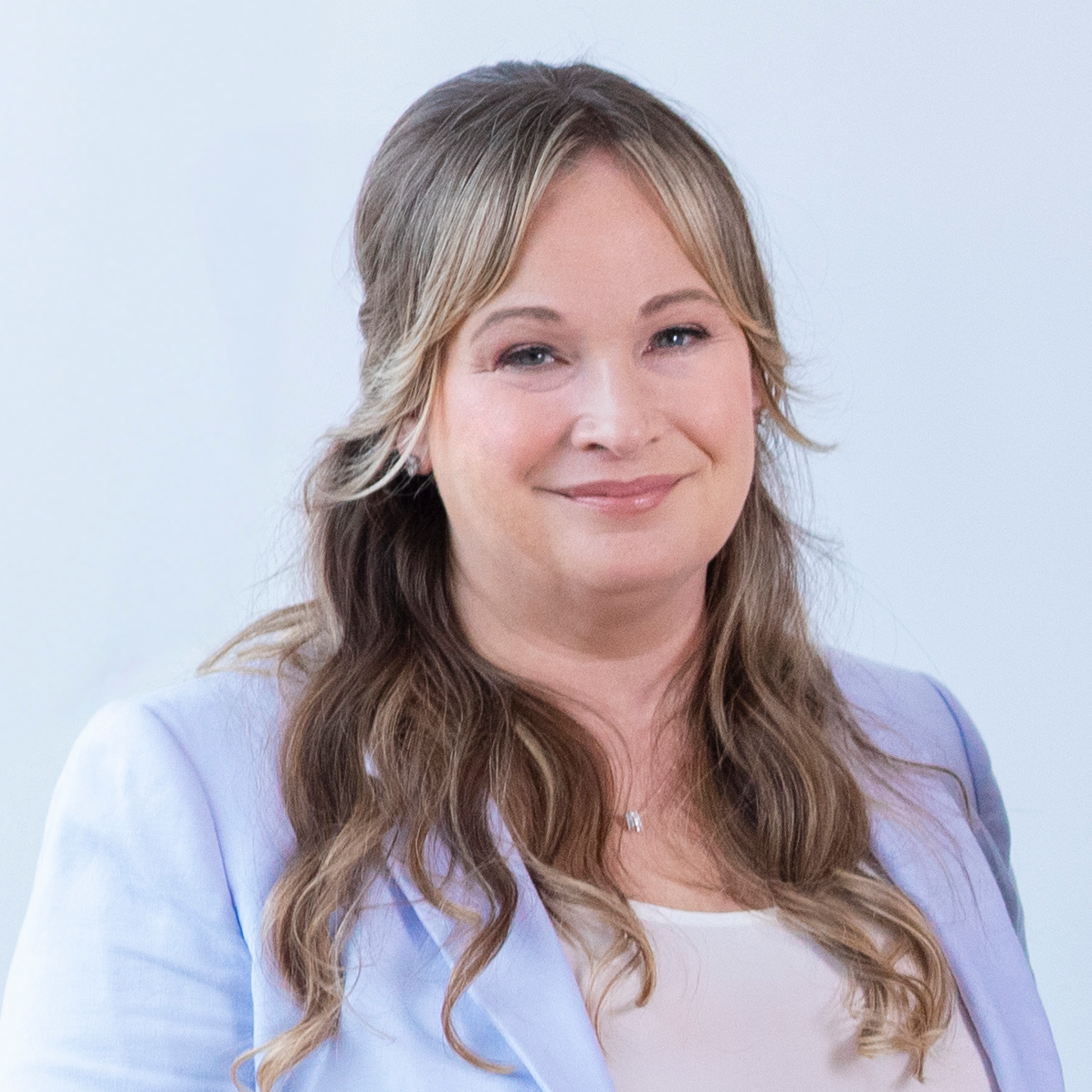
Emily Friedland: As of the end of June, FDA had granted 1320 Breakthrough Device designations. About 210 of those devices have marketing authorization so far. Asking for the designation is free. FDA answers in about 60 days. And if the answer is no. Nobody outside the FDA finds out. So a lot of companies asked. I'm Emily Friedland, VP of Clinical research at DCN Dx. And this is Expert Insights. Today we're talking about who should ask what you get if FDA says yes, and which of the programs FDA and CMS added this year applied to a diagnostic. Dan Simpson is our director of regulatory affairs. He has written Breakthrough requests and won them. How do we get Breakthrough? Is a question he hears a lot. Dan welcome back.
Dan Simpson: Thanks, Emily. As always, great to talk to you.
Emily: Let's start with the definition. The statute says a Breakthrough device has to provide more effective treatment or diagnosis of a life threatening or irreversibly debilitating disease or condition, and then meet one of four other tests. What does this mean for a diagnostic? And where did the companies who bring this to you usually get it wrong?
Dan: Great question to start off. So really that main question about a more effective treatment or diagnosis over a life threatening or irreversibly debilitating disease. The big thing the other four that were mentioned are kind of a subset of that for IVDs. Obviously we're diagnosing, right? So it's a noticeable gain in clinical utility - clinical use over what's already out there. And then really that definition of what's life threatening and what's irreversibly debilitating becomes the other part you have to prove. For some diseases, obviously, that's very easy. Some you really have to dig into literature and do that. Where companies can get this wrong is really what industry groups, KOLs believe is that gain in effectiveness out there, that leap in standard of care. It's really getting the outside community to agree with you in that Breakthrough of what benefit is.
Emily: Everybody thinks their baby is beautiful and brilliant, right?
Dan: Yeah, unfortunately, that's what it comes down to. Yes.
Emily: FDA updated the guidance in September 2023 to say that improving access to care and addressing health disparities can count toward the criteria. You told me that's been a big one lately. How does an IVD make that argument?
Dan: It has been a focus of a lot of the public health government entities, including NIH, CDC and FDA, all together increasing access to underserved populations for health care. And so when you think about that from a diagnostic perspective, right. It starts, I think, if you have a novel marker that's out there, where the only other way you used to diagnose was maybe some expensive imaging MRI, something like that. Just by getting an IVD test already increases access, right? Because you don't maybe have to drive three hours to a hospital somewhere if you're in a rural community, and then even if it's a lab test, maybe it's just going to your doctor or going to a phlebotomy lab getting your blood drawn. But then beyond that, if you go to Point of Care or even home, as we're going to talk about later, then you're really increasing the access, right? And then you have the cost socioeconomic factor to in there, right. That hopefully over-the-counter IVD test will be a lot less than right, an MRI or something like that. So those are some of the factors. Location. Spreading it out to where people in rural areas can actually have access to this test. And so obviously OTC is the ultimate way to do that. But even point of care or even a lab test when before you had to, you know, go into a big health care center to get tested on maybe some kind of imaging device.
Emily: So the innovation can be truly a brand new methodology, or it could be biomarker. We've tested for a long time, but now we can put it in the hands of doctors or nurses caring or in the patients hands. DAN Exactly.
Emily: So that's interesting. We'll get into a little bit more of that a little bit later. When we talk about the device classification and the regulatory pathways, how much of the argument is about what the test does to a clinical decision and how much is about how serious the population is, say it's a rare disease with no clear test at all. Is that enough on its own?
Dan: So I think it can be enough or mostly enough on its own, because you can do Breakthrough at any phase in development, really, that intended use and how it's going to be used, and what that foreseen improvement over standard of care is really the big argument. However, you do have to have enough data to show that that improvement is going to be real. Right. So you need to at least have feasibility data. It doesn't have to be clinical data. As you very well know. It doesn't have to be that level of data. But you have to show that it works and that it's really a good probability that improvement is going to work.
Emily: What goes into a request that gets granted, and what's missing from the ones that don't?
Dan: It's really about what the outside community perceives. And really, if they think that this particular IVD will offer a benefit in that disease state over what they currently have. And so it's really getting those outside opinions, industry associations, disease associations that maybe have algorithms that aren't being met currently. Right. With the current standard of care and showing how your device, that's where I've seen it really succeed is where you can say the American Heart Association says this, and right now they're not doing this. Our device will allow them to do this. It's that kind of thing. It's really, like you said, coming from the parents. You know, it's not going to really have a good argument because you're a little bit biased about your own test. Right? It's getting KOLs, getting testimonials, showing that you're going to meet what really should happen out there, or even improve what current diagnostic criteria are out there.
Emily: You told me you go looking for the society guidelines, the algorithms clinicians are supposed to follow and show where they break down. Why does this matter more to FDA than the test performance numbers at the point of their Breakthrough request?
Dan: It's really because that's proof that if your test performs as it should, it's going to offer that improvement a meaningful improvement, because we can all bring up ways that our test is going to improve. I can invent all sorts of things, right. But if it's really going to what industry has set up as the criteria for diagnosing a test, if you can really show that you're going to meet that where others don't meet it or improve upon that, then that's really just complete evidence that it is an improvement over standard of care.
Emily: You touched on earlier that you definitely don't need to go into your full clinical trials before you request this. And we would hope that you would be requesting your Breakthrough designation way earlier in your development process. But what data do you need to show, and how much of it do you need for the Breakthrough request?
Dan: It's really up to what type of test it is and really how far along you're in development, because I've seen Breakthroughs get by just on peer reviewed research publications of people running your test. Right. So it can be as as low level as that. I've seen other companies do almost full analytical testing to show to. It really depends. I mean, obviously if you are farther along and development, you know, the more data you have could be better potentially. Sometimes we know that like a bunch of meaningless data is just going to confuse FDA. So it has to be very focused on what you want to show, just to really make them feel that the test is solid. You know, analytically solid is a good thing, although you don't need a, you know, the level of analytical testing that you would in a 510(k) or De Novo. It's showing that you can detect what you want to detect at a meaningful level, you know, showing that other people can run it is probably a good thing too. But really beyond that, maybe not necessary. So maybe some low level analytical and a little bit of maybe having some partners run the assay. And really published articles are very good. FDA likes to see published articles. Yeah.
Emily: A lot of products are better than what's out there, but they're not necessarily meeting FDA's criteria of being significantly better. Where does FDA draw that line?
Dan: To be honest, it is a judgment call on their end. So, you know, you do have to have a bit of a thick skin, because I've seen a lot of my clients that haven't gotten Breakthrough. I firmly believe they were Breakthrough, but FDA didn't and they had doubt. You know, it's just like anything sometimes if you don't present it right the first time, FDA can get things stuck in their head like we all do, right? We're humans. They're human. So they can get a bias. And they once they get a bias, it's sometimes hard to get that out of their mind. So it's really presenting it that it's that benefit argument again. You really have to present that well because that's what they're going to to really go off. And the other thing is, if you do present a lot of data, and I've had people present almost like a good clinical study, and sometimes it's actually goes against you because then they're holding you to that level and they're going to ask more questions. And when I question FDA, it's like, well, this doesn't have to be a GCP study. They said, well, now we want to know if it's this improvement is going to be real. But they were purely going off of the clinical data now. So they were treating it like clinical data. So you have to be careful about that too.
Emily: Always challenging to have to communicate, especially to scientists or researchers, that more data isn't always better, right? Sometimes. Sometimes more data is just more data, or more data is more confusing.
Emily: There's a 60 day review period from the time that you submit your Breakthrough request. What happens in that 60 days? You said you can usually tell where the FDA is headed from the questions they ask around day 30. What's in the email, when they're going to say yes, and what's in it when they're not?
Dan: Yeah. And keep in mind, this is my own little empirical feelings about this. But yeah. So when you submit your Breakthrough, you will get some back and forth what they call interactive review on email them trying to understand. And then I do find around that day 30 they will send you almost it feels like an AINN in the 510(k) or De Novo world, but it's not as formal and it's usually by email still. And they will ask you a whole bunch of questions trying to get to that final decision. And so it will be things about the data you submitted, and about your arguments on improvement over standard of care. If they are really big philosophical questions like, you know, we read this article and we think that you misunderstood this and we see this as not being an improvement. You know, when they're challenging where they think it's not an actual improvement. This device out there does the same thing your device does. You know, they'll say things like that and they'll question your data, maybe about things if they do those kind of things to usually starting to head to that denial. But if it's more like, oh, we want to know more about your intended use specifically, we want to know, you know, more about this treatment algorithm you you put in there and how your device fits into their more, you know, nuanced questions, but more just clarification. If it's more clarification, they usually headed, I feel to accepting the Breakthrough.
Emily: Or just state it. So the data says that FDA accepts about 30% of Breakthrough applications.
Emily: If they say no, does that hurt you later in the review process?
Dan: No, it does not. And when you do get a denial letter and I've gotten some, you know, about 70% of the time they're usually very positive still even on their denials. They usually say something like, this has nothing to do with the quality of your of your device and your future marketing authorization status. It's just that we believe that this doesn't qualify for Breakthrough. And just on those those terms that we've talked about. So they're usually very positive about continuing on with the marketing authorization. And the other thing is this is all confidential, like most things are with FDA. So none of your competitors, nobody out there is going to know that this ever happened and that you got it. You know, again, you and I, Emily, love when companies do press releases, when they submit things. So never do a press release that says you submitted a Breakthrough. Let's say that because then that will blow your confidentiality.
Emily: I think I'm just superstitious. So when I do a submission and I, you know, you're not guaranteed a clearance or an approval or feedback, that's positive. When you do a submission, no matter how confident you are.
Emily: So that's, Dan and I, are just, personal superstitious belief.
Dan: Yeah, but if you could in this case, avoid, it is really detrimental because you will blow your confidentiality then. Yeah. Especially when you don't get when nobody hears that you got the Breakthrough, they can only assume. Right. EMILY For sure.
Emily: And speaking of just kind of belief systems around these submissions and designations, there's a belief that a Breakthrough designation lowers the bar ultimately for your submission. Does it? And how much of the data from the request carries over to your submission?
Dan: I don't think it really lowers the bar from a technical standpoint, but what it does. You know, some of the benefits, right, are that you get priority review. You get more interaction with FDA. They have what's called a clinical development protocol. You know, they would work with you more closely and they would actually agree on that protocol, which, you know, in a pre-sub it's never binding. Right. But in this case it kind of is because you both agree to it together. And so there's a lot of great benefits like that. But as far as as technically it I don't think it really does. And because you are most likely I mean pretty much have to be a novel device. Your bar is going to be higher, right? I don't think it really lowers the bar too much than that, but it gives you resources to help you get over the bar.
Emily: Yeah, I mean, just that written agreement that is somewhat binding on a clinical plan is a big difference from the normal pre-sub process. And I am always cautioning clients that you can ask whatever you want in your pre-sub process and you can get responses, but that doesn't mean that in a year or two, when you submit your application, that the agency is going to continue to agree with that study design. That is a huge advantage, and I've seen that unfortunately happen. Other people submit get approvals, but only your study design is completely different. And you haven't made that update. The guidance says FDA may accept more uncertainty before market for Breakthrough device and collect more of the data after. Have you seen that happen for a diagnostic?
Dan: I personally have not, but at least it makes sense from a kind of the Breakthrough philosophy, right? It's like even on the drug side, right? When they fast track over there, if it's something that is an underserved disease population and a population that's suffering, that if your product out there is going to help, they will take more leeway and chances and maybe then, yeah, do some kind of post-market agreement with you, kind of almost PMA ish, like or collect real world evidence or something later just because if they see there's a population in need. I mean, that's the point of Breakthrough, right? I'm one of the points. And so that makes a lot of sense to me. I haven't seen it personally, but it makes a lot of sense to me.
Emily: FDA lists a handful of things you get with designation. Which one has mattered the most on the programs you've worked on?
Dan: The sprint discussion. Taking a step back is one topic that you want to talk about with FDA, and you do it by email and you submit that topic in 20 Days later, you'll have an answer from FDA. So if you think about the time savings on that, it's it's quite remarkable just being able to get quick input from FDA. We know that nowadays that's very hard to do. I mean, I can still remember where you could actually call FDA, but you can't do that anymore. That I think is really the most impactful for me, being a regulatory person and trying to get answers for a marketing authorization.
Emily: What are you allowed to say publicly once you have a designation and when?
Dan: When you have a designation, you can taut from the mountaintop that you got Breakthrough on this indication. And that's an important point, is that your indication for Breakthrough may be much more limited than what your final marketing authorization indication may be. So it's just for that indication very specific to whatever the Breakthrough says. Right. For your what your indication for Breakthrough was. You can taut that to the mountaintops. And, you know, it is one of the great benefits. The, the problem there, again, from a business standpoint, is you better be serious about getting that market authorization after that because you've told the world about this, right? And then if you don't get it, it may end up biting you later. Right. And that's another thing to remember, is that Breakthrough is a commitment on your side, too. That's not just all. Yay, yay. We got Breakthrough. Now we have work to do because FDA is expecting now that they put all this effort into getting you Breakthrough, that you're going to utilize it and you're going to get that authorization, you're going to pursue it. If you if you kind of then just walk away, you're going to damage the relationship.
Emily: Yeah, we never want to waste the agency's time. Yes. That is for sure. A lesson learned over the course of many, many years.
Dan: It's a waste of what you just did too, obviously. It takes a lot to do this. So on both sides.
Emily: Most of the Breakthroughs you've worked on have been De Novos. Can this designation also be used for the kind of traditional 510(k) device?
Dan: Yeah. So technically, I mean, so in those, those second tier questions, you know, it does say there's no cleared, cleared or approved device out there. And that would obviously be De Novo, but it says offers significant improvement over cleared or approved. So you can the it's in there right, that you can do 510(k). It comes down to being a tougher argument, obviously, because it goes back to, Emily, I think you and I always talk about this, right. Everybody wants to be different from a competitive business standpoint, but everybody wants to be the same to FDA. So you get an easier pathway. So that's always this kind of yin and yang, you know, fighting amongst an inner fight. Right. It's always a tough argument to say we're the same but different. Right. And that's what you're trying to say when you're a 510(k) in the Breakthrough argument. But it can be done as regulatory people. We can make some pretty complicated arguments of why something that isn't completely like a predicate is still substantially equivalent. So you can make a lot of those arguments. The more you put yourself in a box, and I think, you know, at some point, Emily, you and I are going to talk about why people shouldn't always be afraid of De Novo. And the benefit of doing a De Novo is that you can make your own sandbox to play in, right? You can. You can make your own intended use so you can make all the claims you want. I think you and I have both experienced where people do a hard 510(k) comparison, and then marketing wants to say all these things they can't say because they're in this very tight intended use. So yes, you can you can do a 510(k) for Breakthrough. And I've seen it more in the medical device side than on the IVD side. There's easier ways to do it on the medical device side, but it's just a harder argument to make.
Emily: You and I both talk about De Novo a lot with clients. And the whole idea was that they understand it's not the burden of a product, but there isn't often a difference, even on the clinical side, between a 510(k) study, a De Novo, or a PMA study. Frankly, this day and age for IVD, especially at point of care over-the-counter, they're all kind of the same study. For the most part, maybe with minor differences, but we have to enroll participants in all comers, real world fashion and have them test it. It doesn't really matter whether we're doing a traditional 510(k), a De Novo, or a PMA. It's pretty much the same study regardless. And I think that's where sometimes people get stuck. From a regulatory perspective, how much longer is it De Novo? FDA's goal is 150 days for a De Novo and 90 for a 510(k), and those are FDA days, not calendar days. What do sponsors see on the calendar?
Dan: I say around 300 days or more for a De Novo, usually from what the data of I've seen coming out of CDRH. So, you know, just under a year, but then of course it can go over that to where if a 510(k) is like 120 to 150 maybe depending, I mean, you can have that rare 90 day. It does happen, but it's usually a very me-too assay, which you and I don't do a lot of those. I don't see a lot of those. And certainly, again, not maybe in the Breakthrough process. Right. Definitely not in Breakthrough. It won't be that way. Yeah.
Emily: De Novo means a higher user fee and may mean a bigger study. Or it might be, as we just discussed, the exact same study you would do for a traditional 510(k), depending on the use, setting and the type of user. For a small company, when is it worth going that way to get Breakthrough and when isn't it?
Dan: It's a tougher argument to say, you know, there's a predicate out there. We're the same as a predicate, but we offer this great improvement. To clarify what I said before, where I've seen it work and often it's more of a medical device. Thing is you add this function that you can support, maybe with a reference device. Now one function represents improvement, right? That's usually where I think that works for 510(k). I think it's it's harder to envision what that one function would be within IVD. And you know, like adding on, you know, a software function maybe, or something like that. Right.
Emily: Maybe it's taking an LFA from a traditional visual read to a reader.
Dan: Potentially. But then it's saying, how does that really that reader and that result really offer that, you know, and maybe it is, you know, an access to health kind of thing. I mean, that's where I see it. It would be on the 510(k) case, but, you know, you start adding too many functions and things and then you're over in the novel side. So it has to be like one thing that you can justify that doesn't change your intended use so much that it's a De Novo.
Emily: So we've talked about some of the benefits already of the Breakthrough device designation and that pathway. What other benefits might organizations see maybe on the reimbursement side for using this designation pathway?
Dan: Yeah, that's a great question. So yeah, FDA has set up some programs with obviously CMS and some other organizations and the payers on the insurance and reimbursement side, they have what's called TAP and NTAP, which are both reimbursement type things, and then RAPID, which is a coverage program to help increase coverage. So TAP is is purely on reimbursement with the payers. And you go into the special program, I believe, and I will qualify all of this, that I'm not a reimbursement or insurance person, but I just know about them because of these benefits. And I can tell clients, you know, to go talk to your reimbursement or insurance consultant. So TAP is very much getting a better reimbursement rate. And you go into this program where you have early access to the payers to talk to them about, you know, how great your device is, and hopefully you get a better reimbursement rate. With NTAP, that's more around Medicare, I believe inpatient hospital payment. Then RAPID is a fairly new program that's more about getting coverage earlier. And with that program, if if you are a Breakthrough product, they can arrange it with, you know, the the payers again, so that when you do get your market authorization, your 510(k) or De Novo that you get coverage on day one. There have been some rumors I hear that are looking maybe to exclude IVDs from this, and I don't know if they're going to have another program or not. And right now IVDs do have access to RAPID, but that might change.
Emily: Let's talk a little bit about the READI-Home program. FDA launched the READI-Home Challenge in April with a September 30th deadline for submissions. It's for devices used in the home after a hospital stay to keep patients from being readmitted. People talk about it like an expedited pathway. Is it one and does it matter to a company that didn't submit?
Dan: So the READI-Home challenge is not, in itself, an expedited program, but it is a way that FDA is trying to foster. They have this home as a healthcare hub initiative. So they're trying to bring a lot of things that are maybe a health care center type things into the home, because I think everybody empirically realized that you probably get well faster at home than in the hospital. With this one, they mentioned in the READI-Home Challenge, they could expedite access into the Breakthrough and what's also called STeP, which is another one which we're not talking about today, another expedited pathway. So they recognize that that you could be a Breakthrough and that and that you later on could become Breakthrough. But it's not in itself one. But what it does is they help you, they put you in front of people in industry. They allow you chances to show your technology to FDA. So there are a lot of benefits. It's just not Breakthrough itself. But you could be Breakthrough after this. You could help you get Breakthrough.
Emily: Where does an IVD fit? For example, what about a home test for a marker that rises before a patient is sick enough to go back to the hospital? How does the sponsor show that connection before they've run the study that proves it?
Dan: Yeah, I think in a lot of ways, you know, LFAs and things like that fit perfectly into this model. Right. Because you want something that that's a home use test that a lay user, which means either a patient or a like a home nurse, right, could run for the patient at home. That could potentially predict in their morbid state, they're headed back to, to a state that could put them back in the hospital. Right. So any type of marker, whether it's disease specific or it's this like a physiological marker that's saying something that you can act on that's going to keep you back out of the hospital. Right. So that's how I see an LFA. I say LFA, but really, any home test LFA just seem to be really perfect for this kind of thing, something that's easy, you know, doesn't have a lot of equipment or any equipment that can just be easily interpreted and then really get on the phone with their doctor and, and say, because that's what it always will come back to with a home use LFA, as we know. Right. Consulting with your doctor and saying, you know, I think I might be taking turn from the worse. How can we keep me from going back into the hospital?
Emily: Does the addition of the over-the-counter CLIA-waived claim change the Breakthrough argument, or does it just add another regulatory track for a waiver?
Dan: It adds another regulatory track for that. And as you know, over-the-counter and CLIA waiver, you're automatically CLIA-waived when you're over-the-counter with a lot of these really sick patients. It's going to be the nurse running it at home. That almost makes it a CLIA waiver application because it's supposed to be self testing is what is waived. Yeah, it's CLIA-waived and not waived from the CLIA waiver. Right there it gets confusing. So yeah I mean I think a CLIA waiver in that case is the best way to go because it could be run by a nurse at home.
Emily: If a founder is listening and thinks their test might qualify for Breakthrough designation. What should they do first?
Dan: You know, they should talk to a regulatory professional. Obviously I'm going to say that. But they really should because you really have to know what your chance is. As we've already stated, it's it's it's not a flip of the coin. It's worse than a flip of a coin. It's about 30%. But, you know, if there's a chance I think we've talked about this. I don't think there's a lot of downside to submitting a Breakthrough other than time and money, obviously. But it's the money that you would you would spend your people or consultant doing it. You know, I do think it's good to understand what your chances are from an independent regulatory professional that you know, doesn't automatically think your baby is pretty, right, as you said, but really looking at your chances objectively first.
Emily: In your experience, when and why do you establish regulatory teams reach out to you for help in the Breakthrough process?
Dan: Well, it could be as simple as they don't have time because they're doing all these other things. And often regulatory people are also quality people in IVD companies. So they're running quality systems. They're doing other submissions. Right. So they may just need a pair of hands or somebody, and maybe you don't have experience doing a Breakthrough. And it really is a different submission. I akin it to like a scientific paper almost, because you're making so many scientific arguments and you're really tying it back to all these testimonials and things like that. So it's a different submission. So if you haven't done it, it may behoove you to find somebody that has done it or at least get their consultation right on that.
Emily: Yeah, I would think that since it's a rare event that FDA grants Breakthrough status anyhow, that it's even rarer to have a regulatory professional who's especially confident and confident in these types of submissions. So using an outside group that does more frequent Breakthrough submissions than most sponsors would do. I think, you know, that's the difference. I always say, if you're working for a CRO compared to a sponsor, for a sponsor, I may see one or two products a year come through my clinical group and into trials in an IVD company. I see tens of products coming through at any given time, and that's same for the regulatory side. We're seeing all sorts of different types of products and doing submissions for all sorts of different types of Breakthrough devices. And so there's just a general knowledge improvement on our side just from exposure and experience. Right. Anytime you add source, that's the main reason I think it's either you don't have enough time or you don't have enough experience.
Emily: Could a company ever ask for Breakthrough expecting a no. Just for feedback alone?
Dan: I don't think so. I mean, you should have a good argument going in. I mean, otherwise do a pre-sub if you just want that interaction. But I do believe you shouldn't be afraid of denial because obviously the odds are a little bit stacked. If you do get a denial but you had a good argument, you can say at least you already have started the conversations with FDA and they're very familiar with your device now. So that's the benefit of still continuing if you get a denial. So don't be afraid of it if you have a good argument. But I wouldn't do it if you don't think you have a good argument.
Emily: We talked about people announcing submissions and designations and all of that. How do you think a designation changes the conversation with investors?
Dan: Oh, I think they very much love it. I think I've seen that they've responded very well because it creates hype in the industry to and to your marketplace. You're going to sell and then the reimbursement side, the benefits you get there. They love it all. So Breakthrough is very good for the investment argument.
Emily: What's the most expensive mistake you've seen a company make because they didn't think of Breakthrough early enough?
Dan: As far as like a De Novo. And you're going to do a De Novo. Right. And so and it's a new biomarker. What's always the big the big problem with with a new biomarker right, is that you have to educate FDA. Right. So I think the Breakthrough actually is a good way to educate FDA, because you lay out all these great arguments about clinical utility and how it's going to improve standard of care. This is why our device is going to be so helpful out there. That type of education earlier in the development process, before you get to the marketing submission is just so valuable, right? You probably see it on the clinical side that maybe go into the clinical too early before you really know what the device does. Well, right. Maybe that's the expensive mistake is that you don't do Breakthrough. You jump into a study too soon, and then the study gets rejected or the submission gets rejected. And then you have to do it all over again. Right.
Emily: I would think you could also end up with limitation to the claim that you want to make. If you design a study that doesn't meet FDA's expectations, and with the Breakthrough process having more binding agreement to your clinical plan, there's less likelihood of you as long as your product performs properly in that design, that you don't get the claims that you anticipate getting, which you see all the time. Limitations on claims because something wasn't properly proven or some subgroup wasn't included in your trial that FDA would have wanted to see. If you want Dan to look at whether your test meets the Breakthrough criteria, you can reach the team at DCNDx.com/contact. Thanks for listening to Expert Insights.