



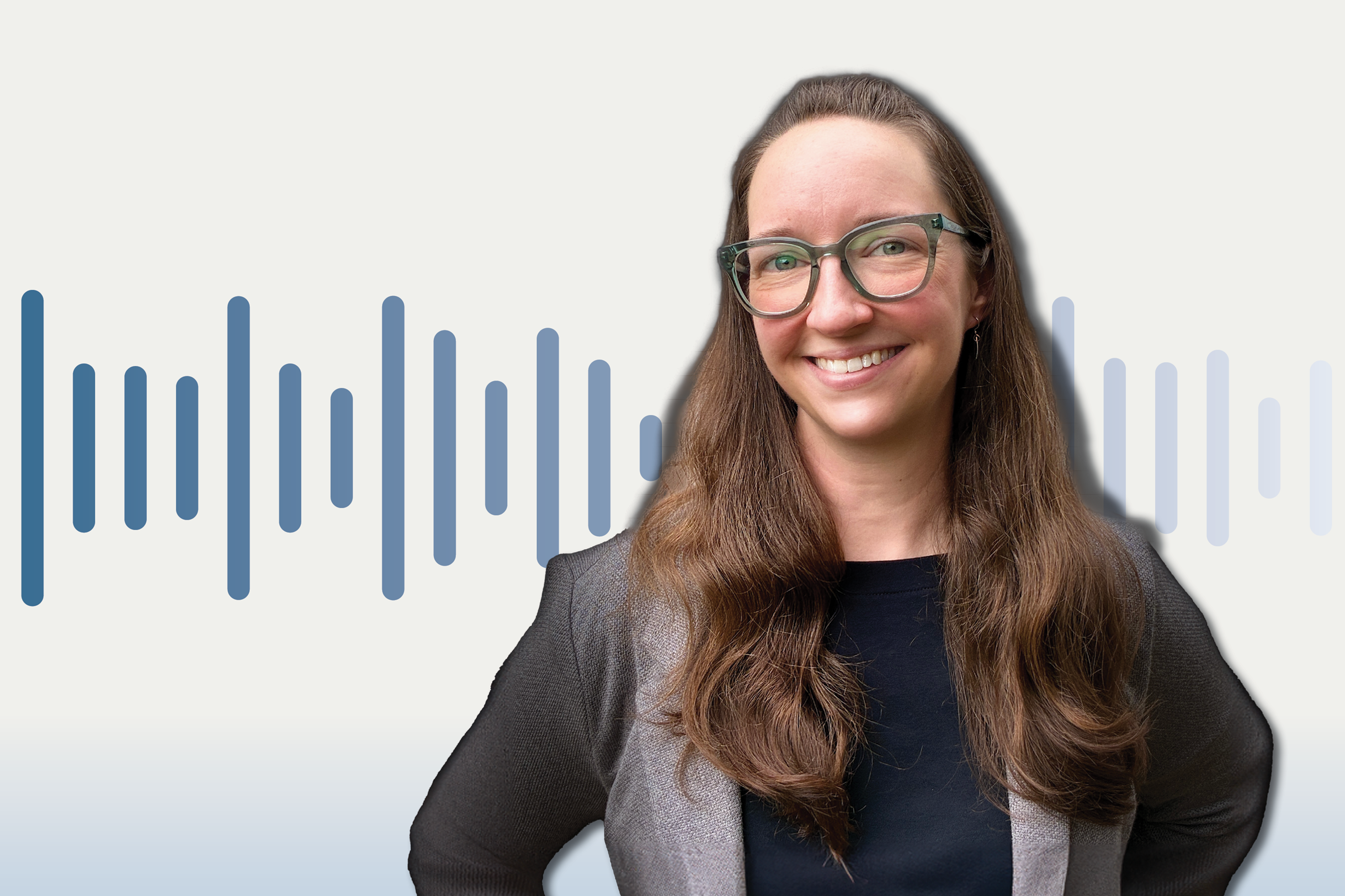

A DCN Dx Expert Insights conversation with Kellie LaRochelle, CEO of Imagene Technology
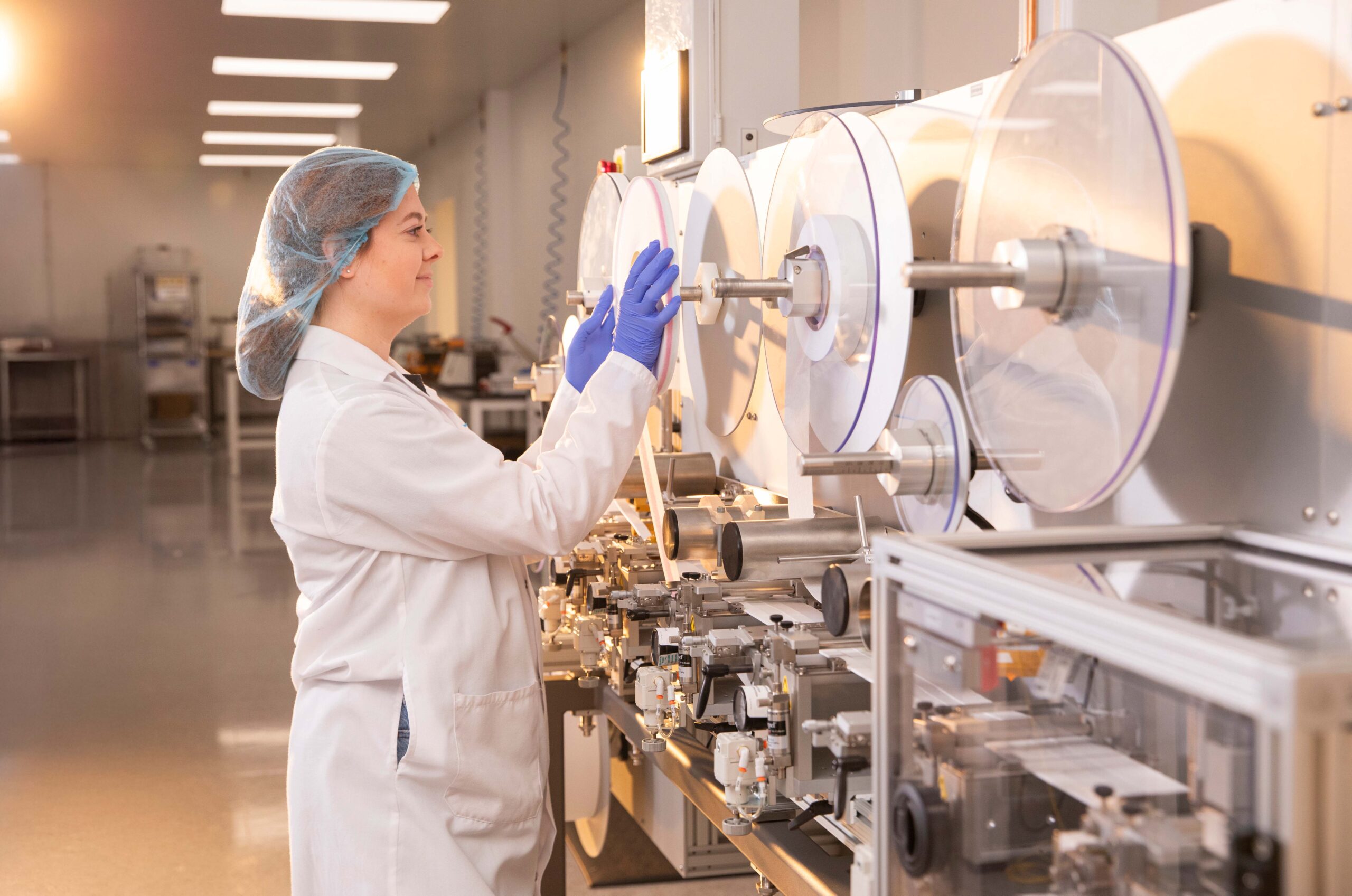
Lateral flow diagnostics succeed when they are designed for the realities of everyday use—whether in the lab, at the bedside, or on the production line. In this episode of Expert Insights, Kellie LaRochelle brings her unique perspective as a former medical laboratory scientist, primary care provider, and now CEO of Imagene Technology. She discusses the three guardrails that never change—ease of use, ruggedness, and affordability—and how they guide decisions from reagent dispensing to error-proofing tests for real-world reliability.
Listeners will hear Kellie’s practical take on avoiding complexity creep, training the next generation of diagnostics professionals, and balancing automation with skilled human oversight. She also explores how suppliers and manufacturers can support distributed strip production in resource-limited settings while ensuring performance at scale. It’s a candid and experience-rich look at how upstream choices shape downstream success—and what it takes to keep lateral flow both reliable and accessible.
Presented in partnership with Imagene Technology, Gold Sponsor of ALFC 2025 and a long-time supporter of the conference. Imagene’s IsoFlow reagent dispensing systems are used by LFA manufacturers worldwide. Podcast listeners can enjoy 10% off their ALFC registrations by using code INSIGHTS at checkout.
Mitzi Rettinger: Welcome to Expert Insights, the DCN Diagnostics podcast about what's next in Rapid Diagnostics. I'm Mitzi Rettinger. This episode is part of our ALFC sponsor series. I'm joined by Kellie LaRochelle, CEO of Imagene Technology and previously a medical laboratory scientist and a primary care provider. Kellie brings a rare 360 degree view of lateral flow across the bench, the exam room and the factory. Imagene is a Gold Sponsor of ALFC 2025 and a long time supporter of the conference. Kellie, thanks for joining us and for Imagene's continued support of the ALFC community.
Kellie Larochelle: Thanks for having me and including me in the series.
Mitzi: Across your roles, you say the same rules always apply ease of use, ruggedness and affordability. What stayed true no matter where you sat.
Kellie: I think these three characteristics are what made lateral flow such a star when it was first introduced into the diagnostic space. And in a world where there's a lot of innovation and forward movement. I think it's important that we keep these three characteristics in mind, so that we don't lose focus of what made lateral flow great in the first place. When I worked as a medical laboratory scientist, that's usually a pretty fast-paced environment, and as a physician assistant who was seeing patients remotely during the pandemic, the ease of use, ruggedness, and affordability were all essential to the success of the test. And now that I'm in my current role as a supplier of reagent dispensers that are used to manufacture the tests, we strive to model our technology after the same three rules, just because it's a symmetry that makes sense to us, and it's worked for us for many years.
Mitzi: You mentioned a couple of the roles you had. Let's dig a little bit deeper into those roles. KELLIE Sure.
Mitzi: So let's go back to the chemistry lab. KELLIE Okay.
Mitzi: Where did lateral flow outperform high-throughput analyzers and where did it fall short in the daily operations?
Kellie: Yeah. Well lateral flow falls short in regard to the high-volume tests. But it outperforms the larger analyzers. And the fact that your strip tests will never have a mechanical malfunction, which is a pretty nice feature.
Mitzi: It doesn't need a plug. That's what you're saying. KELLIE Yeah. MITZI That's great.
Kellie: When you're working in a high-throughput lab setting, you need the high-throughput analyzers to handle the volume in those settings. The lateral flow test strips are generally used for the low-volume tests like pregnancy, mono flu, RSV, things like that. The chemistry panels complete blood counts, and the other high-volume tests are run on the big analyzers. And the most obvious time when lateral flow shines is when the high-throughput analyzers crash. Technical issues like cassettes, jamming, or aspiration problems can take those machines down for a time, and that's usually pretty stressful. You have a lot of people calling the lab looking for results. You never have to worry about that with a lateral flow test, cassettes don't jam and automated pipettes don't crash. The lateral flow test is its own miniature contained laboratory stuffed into a little package, which is pretty nice. And in the situations where the analyzers fail, it would be nice to have a lateral flow as a backup option for at least some of the more high-volume tests, so that emergency department or operating rooms could still get results, while the downed analyzers being tended to in the rural labs, where lateral flow tests are the star. They're really a powerful tool for those places that don't have the multi-million or billion dollar hospital systems, and sometimes they can be the only resource they have, so it's essential.
Mitzi: That's a real interesting perspective to kind of really talk about. If I go back to your same rules that you've carried. The ease of use and ruggedness are two that you've just called out as potentially being a concern with a big analyzer versus something that you know you can run regardless of whether or not you have electricity or if it's operating properly. KELLIE Yeah. Right.
Mitzi: So you kind of touched a little bit on the clinic already. But if you look at in the clinic or even in a home setting, what are the top error traps that teams should design around if they want real-world reliability?
Kellie: Yeah, I think this is where the ease of use and the ruggedness are essential. Medical assistants, nurses, and other providers in the clinic. They have the know how to operate a lateral flow test, but they're operating in a fast-paced environment. So ease of use equates to time saved which is essential. And then at home you've got. All different kinds of people of all ages, with minimal medical or diagnostic knowhow who are expected to execute this test successfully. And I feel like there's a general guideline in life that you should relay information at a sixth grade level, right, in order to get your point across successfully. And I feel like lateral flow tests should be designed with this in mind. You want to make sure you have the least amount of parts required to run the test, and you need simple and direct instructions. And you also want it to be rugged because once it leaves the shelf, it's hard to know what that test is going to go through. It might sit in a hot car for a long time, or get smushed at the bottom of a backpack, so you want to make it as rugged as you can.
Mitzi: I have heard several talks recently about home testing, and a lot of them have to do with instructions for use or human factor testing and really making sure that people can follow instructions. And so I completely agree. Some of the stories that I heard, I mean, you kind of shiver a little bit thinking that's how they read that? But it can make a huge difference. And if you don't test it amongst several different demographics, then maybe to your point, take it down and let someone younger say how would I do this if I read it.
Kellie: Yeah. It's not as easy as one would think. MITZI Right, right.
Kellie: Exactly, exactly.
Mitzi: So shifting gears just a small bit, you know, we're talking about the simple lateral flow strips or the highly complex analyzers. Well, what about digital readers and maybe AI? They're very exciting. But complexity and cost can creep when you start introducing these into the lateral flow space. What checks help teams keep both in bounds as the futures start accumulating?
Kellie: Yeah, I think this relates to the last question and that the overall key is to keep it simple. The new innovations and technology can be very exciting, but sometimes just because we can do something doesn't mean that we should do it. And I think we should ask ourselves, is the change going to improve the ease of use for the patient? Is it going to make the test more rugged, increase the sensitivity or specificity, or reduce the cost? If yes to everything, then it's a green light. Let's go for it. But if more than likely the answers are going to be mixed. And so I think at each step of the way, it's good to just check in with those three guardrails we've been discussing. Ease of use, ruggedness and affordability. As a health care provider, we often ask ourselves before we order anything, is this going to change the outcome or the course of the treatment plan? If it's not going to, then there's no point in pursuing it. So if a developer is looking to add new features, bells or whistles to their product, I would caution them to first ask, is this going to benefit the end user in a meaningful way?
Mitzi: Those are all great points, but let's unpack this idea just a little bit. If we go back to some of your comments earlier where you said it would be really great if we had some of these lateral flow tests for back up to an analyzer. Some of the things that we run on analyzers, the reason we do that is they are somewhat more complex, which is thus why in some cases, people are bringing in a reader or they're using algorithms behind and in the software to actually give the accurate results. So it's almost a means to an end, you know, to bring some of those more complex tests to the lateral flow format. We need these things to do that. So what, you know, how would you balance that in your mind is you're saying, I want these more complex tests to come to something that has more of the features that I'm saying are part of my go to's. Ease of use and ruggedness. But it might make the overall thing a little more complex. How do we balance that?
Kellie: Yeah, I think it's good. You know, we obviously do need to move forward and there are going to be some complex models, and I think the population that you're building those for, it should be geared towards like a hospital setting or people who are going to know what they're doing and how to operate that. That's where it's going to be the most successful. I don't necessarily see those types of technology entering the home, and that's just kind of a different product. If we can simplify it to a sixth grade level and someone can use that successfully, great. But I think at this point we're kind of making different products geared towards the specific audience that they're meant for.
Mitzi: So just making sure you're putting the right test in the hands of the right person for the right purpose. KELLIE Exactly right.
Mitzi: This is definitely shifting gears a little bit. We're going to talk a little bit more about upstream choices or downstream reliability. So how do reagent dispensing choices influence uniformity signal consistency complaint rates once the products are scaled?
Kellie: Yeah. I think, you know, many factors obviously are going to influence your line consistency on your tests like membrane quality, your dispense rates, reagent concentration, etc. In regard to the reagent dispensers and their impact on the line consistency, you want to make sure you're using a system that allows you to customize your dispense rates and speeds easily, as this is probably going to take a lot of trial and error for you to determine the optimal settings for your specific assay. Everybody is doing something a little bit different, so you need to be able to customize pretty easily. High quality pumps are obviously essential. Additionally, Imagene has always preferred and been a cheerleader for the contact nozzles. They take advantage of surface tension to precisely and gently, which is important dispense fluid onto the membrane, and this often results in a smaller amount of reagent needed in order to get an adequate antibody concentration, because the process is gently laying down the line so there's no damage to the antibodies. Additionally, the contact nozzles tend to have a larger inside diameter, which reduces the chances of clogging, so we like that as well. So through our experience that's been the best choice. So that's kind of what we're known for. I mean, we don't like the non-contact nozzles because it's like a printer head. That's where you get the inspiration from for those dots. It's essentially the same technology as an inkjet printer. It requires so much force to push that fluid because you need to you're shooting it. It's like a gun from that nozzle onto the membrane. And when you're talking about antibodies, that's aggressive handling. We have found that a lot of antibodies get damaged in that process. And so a customer will find themselves having to use sometimes up to triple the amount of concentration of antibody to get the same quality line as you would with a non-contact nozzle, just because so much of your antibody is getting damaged in that process.
Mitzi: So without naming names, share an example where an early material or process choice, limited performance or cost later. And knowing what you know now, how would you redesign it?
Kellie: Yeah, I think I can speak to this kind of peripherally or more generally than a specific product, but I would start with COVID, which I think was a great stress test for everyone in the industry. And we quickly realized during that time that some of our manufacturing processes were not allowing us to be nimble enough in times of high need. So it was a big test for us, and we found ourselves grappling with wanting to stay with tried and true methods, but also needing to implement some change that would make us more nimble. And our formula has worked well for us for so long. That change feels a little unsure and scary, and one of the reasons our customers like our systems is because of their consistency. So keeping that in mind, while also being sort of forced into change can be tricky. But we did realize that we needed to make some changes in order to keep up with demand. And also, while the lateral flow world is dealing with change in the form of readers and AI, like you were saying, we as a manufacturing company are dealing with change in the form of additive manufacturing, otherwise known as 3D printing, which is really coming onto the scene strongly, and machine shops are becoming more scarce. So these manufacturing techniques are upstream choices for us that are going to influence our downstream reliability. So we are adapting to these changes that are happening in manufacturing, but we're trying to be very methodical and conscientious so that we don't lose sight of our mission, which is to provide those rugged, reliable and affordable products. So I think it is important to have this clear vision or your big why. And then when you are making these upstream choices, I would be sure to have frequent stops or check in points where you just need to take a step back and remind yourself of that ultimate mission. And I think that will help you stay on track and make sure that you achieve your goals downstream.
Mitzi: That's insightful. And I think, you know, when I think about what you said in the first question and this one, it's be open minded, be agile. Listen to the market, the customer. But try don't immediately say no. Don't immediately say yes. Test it and ensure that you're staying true to your core values. Right. KELLIE Yeah, exactly.
Mitzi: So if you handed teams a one page shiny feature pressure test for readers or AI, what three questions would be on it?
Kellie: Yeah. As I've mentioned, the lateral flow tests are most powerful in the resource-limited areas, I think. So I like to keep those customers in mind when we're developing new technologies. So first I would say, have you made the technology as user friendly as it can be? Could someone working in a clinic, perhaps with English as a second language, figure out how to properly use the device? That's essential. Secondly, is the technology as rugged as it can be? Can it withstand brownouts or frequent electricity fluctuations? Can operate in high-humidity and high-temperature climates. Those are things to keep in mind. And lastly, does it require a lot of support? If it requires a lot of maintenance or you have to do regular upgrades by skilled technicians, then it might not thrive in these sort of resource-limited areas. And that's three. But four affordability.
Mitzi: Yeah. Well you know I'll add like a 3.5. Okay. Does it need batteries. Yeah. Yeah. It's one of the things that we learned in working with some clients in low and middle income countries was we had put external batteries and apparently those are golden. And so they were disappearing. Yeah. It's just making sure you understand the customer and what they need, and that you're asking those questions so that you put the right product in place.
Kellie: Yeah, absolutely.
Mitzi: Many customers are modernizing while veteran experts retire. So how do you capture that know how before it walks out the door. And what practices work on a busy line?
Kellie: Yes, this speaks to me deeply. The people who got in on the ground floor just as lateral flow was developing, are now getting ready to retire. And that is exactly what's happening at Imagene. Our founder and all of our employees have been with the company since inception, so I've been brought on to bring in the next generation of workers. So I feel that pressure to make sure this knowledge gets passed down and to absorb as much as I can. It's really important that we capture these pearls of wisdom from these veteran workers. A lot of companies probably already have good documentation on how they're manufacturing, but I think it's really valuable to know why you're manufacturing in that way. The trial and error process that the veterans went through do hold value, and I think it could prevent us from making some timely or expensive mistakes as we move forward. And even if. Those veteran workers were working with what we would maybe now consider old technology. The experiences they had can be valuable to us as we move ahead. And so I would talk to your veteran workers, document their experiences, know why you're doing what you're doing, and even if it doesn't seem relevant, I think it could be helpful to us later. And also, if possible, try and get some overlap with your new workers and your retiring workers when it's possible. I think shadowing is so important. There's so many things we do without thinking about it.
Mitzi: Yeah, that until someone watches you, you never documented it. You never put it down because it was just natural. KELLIE Absolutely.
Mitzi: Having someone watch you can really, really make a difference. KELLIE Yeah.
Mitzi: The only other question for you and, you know, it's how do you capture this information. But I think a lot of times what we forget is remembering what we tried that failed and not repeating those things, because as soon as it's real easy, if you're standing next to me and I go, well, why haven't we done this? And you say, well, we did, and this is what happened. You know, if you're no longer there, I feel I've got this great idea. I'm just going to repeat it. So what are your thoughts around capturing what didn't work?
Kellie: Yeah. I mean, in medicine, documentation is a huge part of what we do, whether we like it or not. Always with the documentation. But you know, if it's not written down, then it didn't happen. And so I think we all need to keep that in mind and documenting everything you do. I mean, a lot of us are scientists, so we should be really into that, right? I mean, hypothesis and getting our little lab notebooks out. And so we should be documenting everything, even if it didn't work out like we thought it was going to, because that's a valuable learning experience and is often when you learn the most. Some of the veteran workers, maybe they didn't, but that's something we can change. Moving forward is making sure we document our successes and our failures to pass down.
Mitzi: You just took me back about 25 years not to date myself, but the guys in the lab that would use my lab notebooks used to make fun of me, because I would either draw everything or I would actually take TLC strips. You know, you were in chemistry and I would tape them in the notebook. So people used to say, really? Like, you've got it. So I relate to that.
Kellie: Absolutely. I have a lab notebook at my desk as we speak that has some lateral flow membrane taped right into it. So no shame.
Mitzi: Thank you. When training new technicians, which habits most strongly correlate with repeatability and yield?
Kellie: Yeah. As we've been talking about, documentation is important. So a well written and detailed standard operating procedure will get you far. But specifically, I think the trainee or the person being present and thoughtful in their work and having methodical execution is important. It's helpful for the new workers to observe how the current workers perform the tasks, but I don't think that necessarily means they must execute the task in exactly the same way. I think people tend to be most successful when they observe how others perform a task, and then you can take away the bits and pieces that you like and then add your own flair, and then you end up with a process that works best for you. So good management should give workers the flexibility for that. And I like to sometimes think of management as like the gutter bumpers on a bowling alley. Have you ever experienced that? If you go with like, children and they put the bumpers up so it doesn't go in the gutter? Gutter balls are great. That's how we learn. I think workers should kind of have the flexibility and the freedom to wander side to side, down the alley like a bowling ball and try new things, make some bumps, learn from mistakes. But if they get too far off course, management is there just to give them a little bit of a bump back towards the main runway. I also think it's really important to remember that new technicians bring fresh eyes to your manufacturing methods, and they will likely pick up inefficiencies that you have missed, so it's really important to listen to them. And lastly, I would say one of my favorite sayings is slow is smooth and smooth is fast. And I think that in emergency situations, as a provider, that comes up a lot and it's one of the first things you learn is to actually slow down in an emergency situation and take a breath, and that's going to make you perform more efficiently. A lot of times, working quickly does not always equate to working efficiently. And so sometimes, sometimes we'll have customers who will want to run their reagent dispensers at top speed. They think that more speed means more yield. However, that usually doesn't result in a quality line. If you run at top speed, the membrane probably won't even have time to absorb your solution, and then you'll often end up with a poor quality line. So there is a sweet spot somewhere in there where slow is smooth and smooth is fast, and you'll find that sweet spot that you can accomplish quality lines at a reasonable speed.
Mitzi: So you talked about efficiency. You know, people say automate. When do you choose to automate and where do you keep those skilled human steps and why?
Kellie: Yeah. When you need high precision and yield. Automated techniques are usually the best. You know, when you're laying down your reagent lines, you need a high precision and yield. So you're going to use an automated reagent dispenser. I can't imagine you're going to have a human hand. Pipetting lines along your membrane could be fun, but I wouldn't recommend it. On the other hand, I think when you are assembling something which requires multiple steps, that's where a human touch is valuable. I think that humans offer checkpoints at each step of the process, and if there's a snag, they can come up with a thoughtful, real-time solution and move forward. And also the last step before a product is packaged for sale. I think that should include evaluation by a human if it's going to be used by humans. And I think a human should set eyes on it. And if it's possible, use it before it leaves the factory, which is what we do with our products. So we are confident when it leaves that as long as shipping goes well, it will land in its destination in the exact same condition. Ready to go. MITZI Human QC. KELLIE That's right.
Mitzi: So earlier you mentioned this. You know you really care about rural and resource-limited settings. What can suppliers and OEMs do now to support reliable and affordable distributed strip production?
Kellie: I would advise companies to keep their most basic and affordable products in their product lines, even as they're growing. So you might want to build on your base product and add more features, which is fine, and you should do that. But I think it's also valuable to keep the basics available. There are people who always are going to want all the bells and whistles and the latest and greatest technology, and we should deliver to those people. However, I think there are there's also a group of people who are resistant to change, or those resource-limited areas who can't afford or don't have the infrastructure to support the bells and whistles. And I think they should also be able to get the tools that they need. And there is a market out there that is not the US believe it or not, and I think it would be wise for people to keep that in mind.
Mitzi: Yep. Kellie, when I joined DCN almost four years ago, that first tour of the facility, and Pat was kind of walking me through all the instrumentation and where everything was, and we have several different, as you are aware. Benchtops for different purposes and those sorts of things. And I remember seeing the Imagene product, and one of the first things he said was, you know, one of the reasons that we have this sitting is almost on our bench is almost everything that you've talked about. He said, we have in a lot of cases, we are transferring, you know, these assays into resource-limited settings. This particular bench top sometimes this is what's sitting on theirs or something similar. Right. And we want to transfer smoothly without any issues when we're doing so he said. It's affordable for those areas. And what I loved was he said it's easily serviceable, yes, by the people in the lab. And so their need to have to call someone or seek help is minimized. And I think that comes to your reliability and your mission, you know, so that people can actually work on those. Whatever does happen. You've really kind of stuck to your values there. And so everything that he said really was exactly what you're putting as your values and what you're looking for.
Kellie: Perfect. Mission accomplished. There you go.
Mitzi: Imagene has supported the LFA community for decades. How does your mission of that? Reliability, ruggedness and affordability show up in the tools that you build and the customers you serve?
Kellie: Yeah, I do like to think of us as a mission driven business. Our founder, Tim Chow, started selling our dispensers in the late 90s with the goal of making rugged, reliable dispensers at an affordable price. And just like you touched upon, he wanted the customers or the scientists who are unboxing this machine to be able to install it and operate it without on-site help. And he didn't want to have to be traveling around the globe fixing machines overseas. So he really tried to make them reliable. And if an unexpected problem comes up, he wanted it to be easy to fix. So these features have allowed us to do really well internationally. And our systems are in over 40 countries, and we have a lot of dispensers that are over 20 years old that are still actively used. I personally have had to replace my refrigerator three times in the past five years, or as my parents had their fridge for 20 years. So I am definitely one of those people who goes around grumbling, saying they don't build things like they used to. And I really don't ever want people to say that about Imagene's products. And so we really try hard to build our products with this in mind. Also, if we've, as we've discussed, lateral flow tests are a powerful tool for the rural locations and places that don't have the large hospital systems. And these are the places that need the test strips the most. And so at Imagene, we also think these are the places that should be empowered to make the test strips. So we try and make our systems able to thrive in those types of settings.
Mitzi: That's inspirational. I like to hear it. It's definitely shined through this entire discussion for sure. So what are you most excited to talk with teams about at ALFC this year, and where can people find you on-site?
Kellie: The ALFC is my favorite conference that we attend, and I am not just saying that because I'm on your podcast. I like it because of the focus on lateral flow. When we go to the larger conferences, it feels like we can get lost because there's so many different industries and you don't really know, like where your people are at, where's our community and also where are the customers that we should be targeting. And I think the conference is valuable for people that are new to the field, because they can connect with the veteran test strip developers and learn from each other's experiences. And it's also a great opportunity for folks to meet the vendors who supply the membranes and the reagents and whatnot. The conference is great for the veterans because we get to see where the industry is going, and we get to network with each other. And customers who come to me for a reagent dispenser are often also in the market for membranes and other lateral flow needs. And so I like to have a network of people that I've met face to face that I can connect my customers with.
Mitzi: Kellie, thank you for the clear and practical guidance. And thank you to Imagene for the longstanding support of ALFC as a Gold Sponsor.
Kellie: Thank you so much for having me.
Mitzi: For our listeners, ALFC 2025 is this October in La Jolla. You can meet Kellie and the Imagene team on-site. And as a reminder to ALFC attendees, be sure to book your hotel rooms at the venue as soon as possible. The hotel room block historically sells out, and you don't want to miss your chance to stay on-site at the conference. You can get a discounted booking link by visiting alfc2025.com and clicking on Lodging at the top of the page. Thanks again for joining us on another episode of Expert Insights. We'll see you next time.